

Start from the world-famous island of Mykonos, and let the wind carry you through the Aegean’s most dazzling destinations — Serifos, Milos, Folegandros, Santorini, Ios, Paros, and Delos.
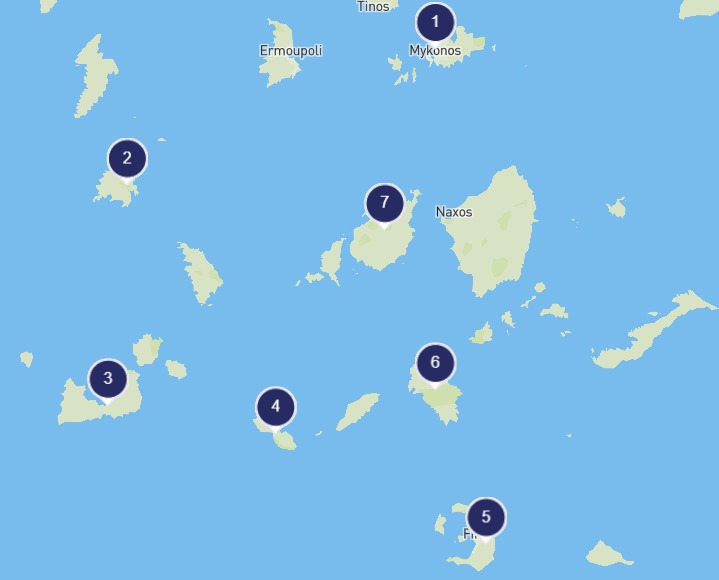
Each island tells its own story: from volcanic cliffs and postcard-perfect villages to secret coves and unforgettable sunsets. Aboard your luxury catamaran, you’ll discover the authentic Cycladic spirit — whitewashed beauty, deep blue horizons, and the effortless elegance of freedom.
Start from the cosmopolitan buzz of Mykonos toward Serifos an island of raw beauty and authentic charm.
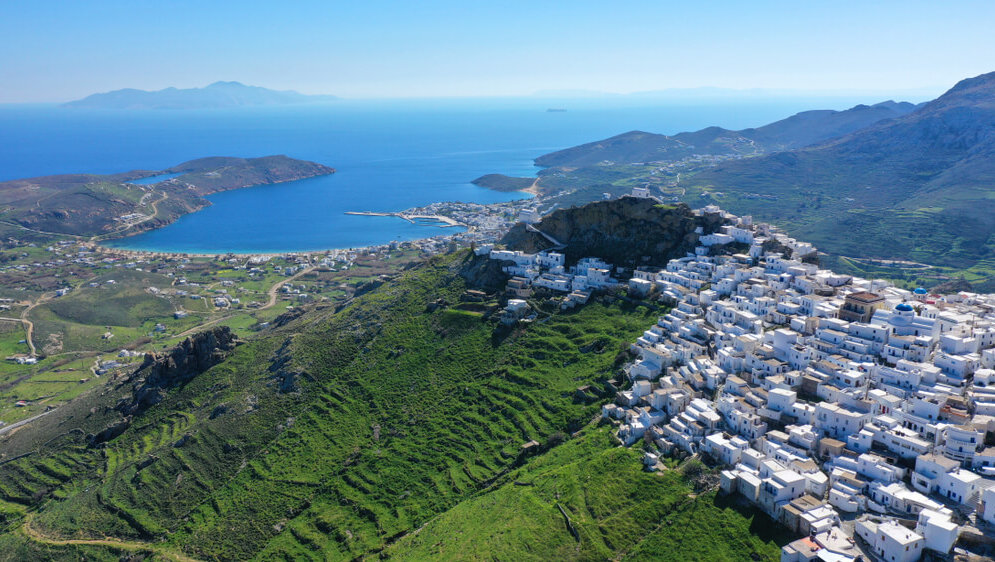
The Cycladic island of Serifos is one of the prettiest off the beaten track destinations of the Aegean! With no overwhelming numbers of tourist facilities, its has maintained its traditional atmosphere and the untamed beauty of its natural landscape! Explore Chora, set above the sea, known for its narrow streets, windmills, and beautiful light.
Continue your journey to Milos, a volcanic masterpiece sculpted by nature’s artistry.
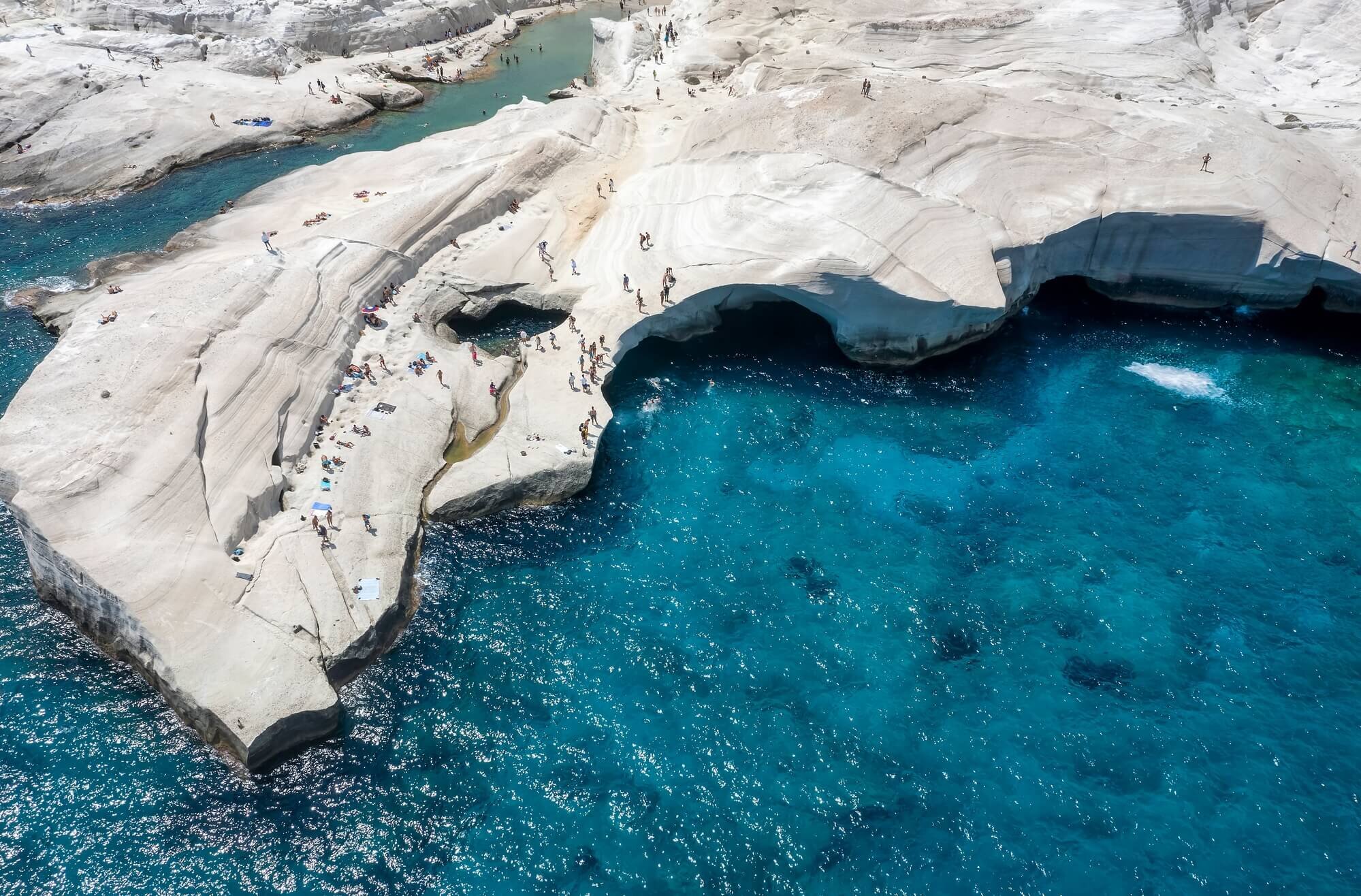
The rare morphology of Milos, along with its mineral richness, creates dream-like combinations of spectacular rock formations and caves, mosaics of various textures and breath-taking colors that surprise and enchant everyone lucky enough to visit this island.
With over 40 beaches, each one different in color and character, Milos is a paradise for sea lovers. Visit Sarakiniko, the moonlike landscape of white volcanic rock, or Kleftiko, where caves and crystal blue waters invite you to dive in and explore. As night falls, the port of Adamas is the perfect spot for a memorable dinner by the water.
Folegandros is an island of incredible natural beauty located between Paros and Santorini.
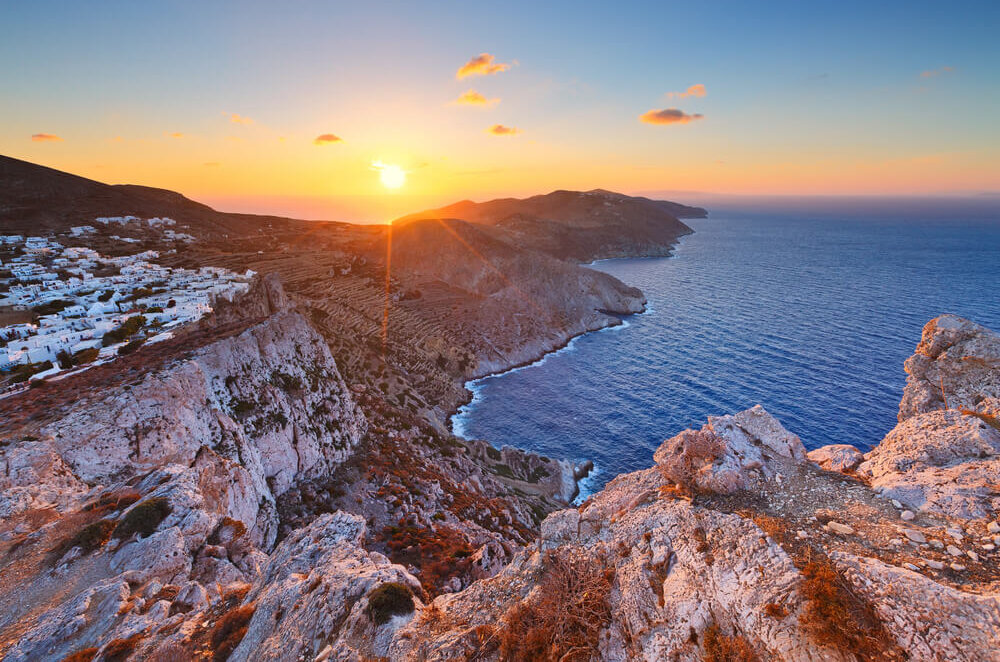
Relatively untouched by international tourists, Folegandros island still manages to keep its unspoiled charm. The hilltop Chora is among the most beautiful in the Aegean — timeless, romantic, and peaceful. The hilltop Chora is among the most beautiful in the Aegean. Tavernas here are serving special local delicacies and fine Greek wine.
Few places in the world can compare to Santorini.
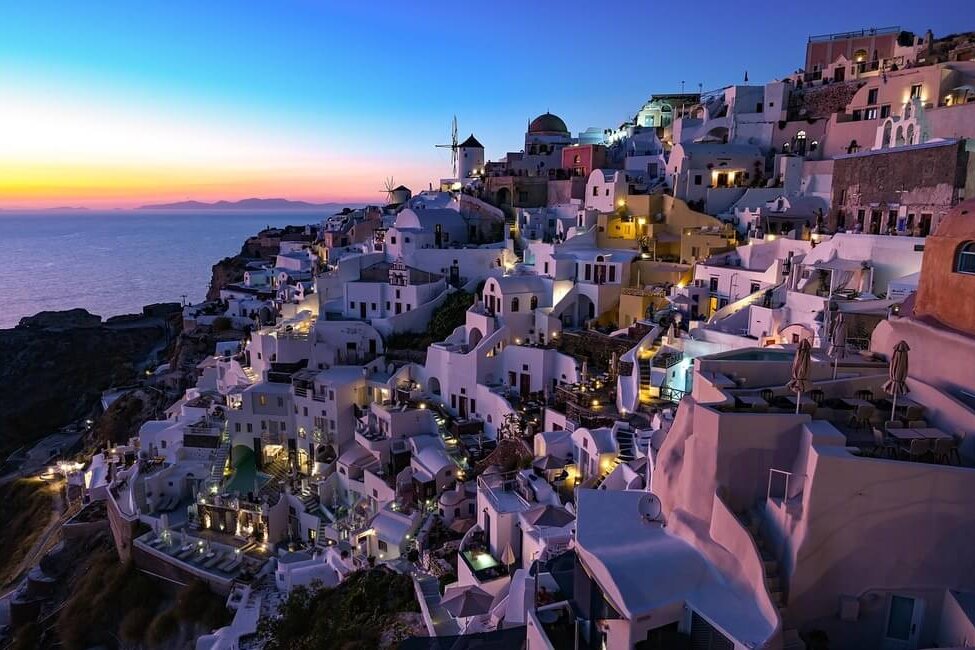
Santorini is one of the most popular travel destinations worldwide and the most visited Greek island. It is one of the most magical places you will ever see! Explore Oia and Fira, admire volcanic beaches of red and black sand, and watch the sunset from the caldera, one of Earth’s most breathtaking sights.
Cruise north to Ios a vibrant island where relaxation and rhythm blend seamlessly.
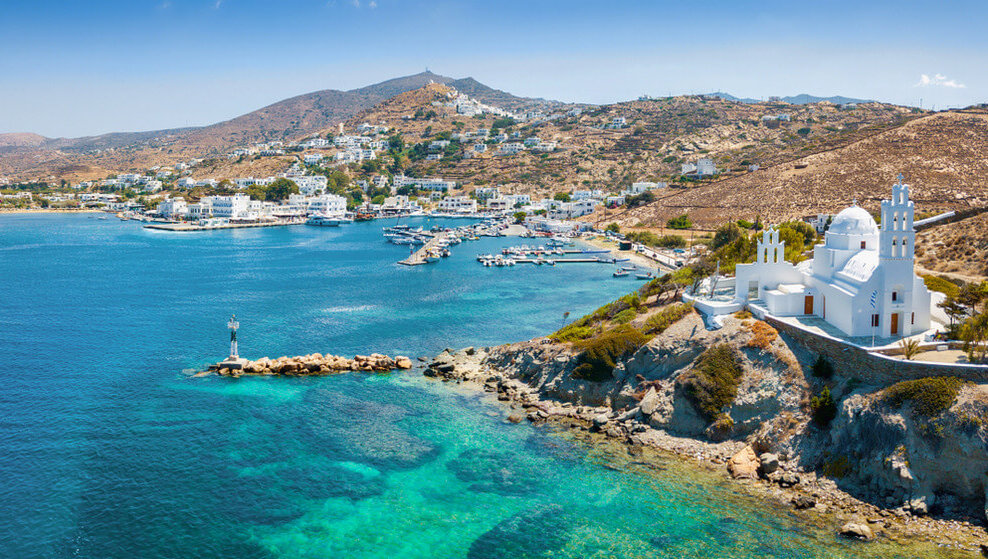
Spend the day swimming at Mylopotas Beach or wandering through the maze-like streets of Ios Chora, filled with boutiques and bars. When evening falls, Ios comes alive — cocktails, music, and laughter echo under the Cycladic moonlight.
Paros welcomes you with a mix of tradition and sophistication.
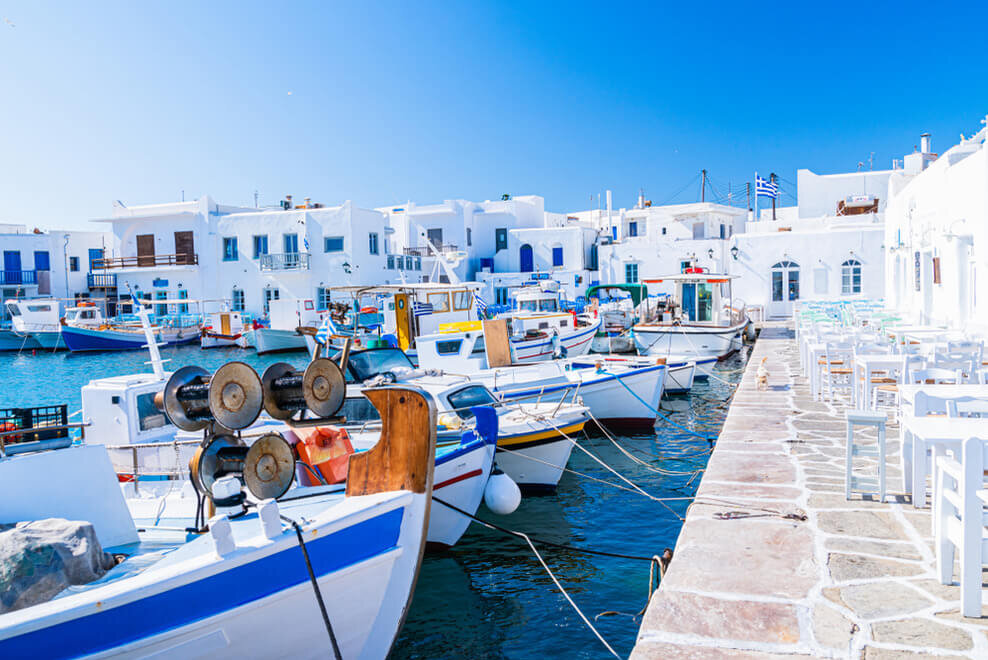
Its harbor towns of Naoussa and Parikia are among the prettiest in the Aegean, combining lively nightlife with elegant simplicity. Swim in crystal waters, wander through marble-paved alleys, and enjoy fine dining in seaside restaurants that capture the refined essence of island life.
On your final day, cruise to the sacred island of Delos , the mythological birthplace of Apollo and Artemis.
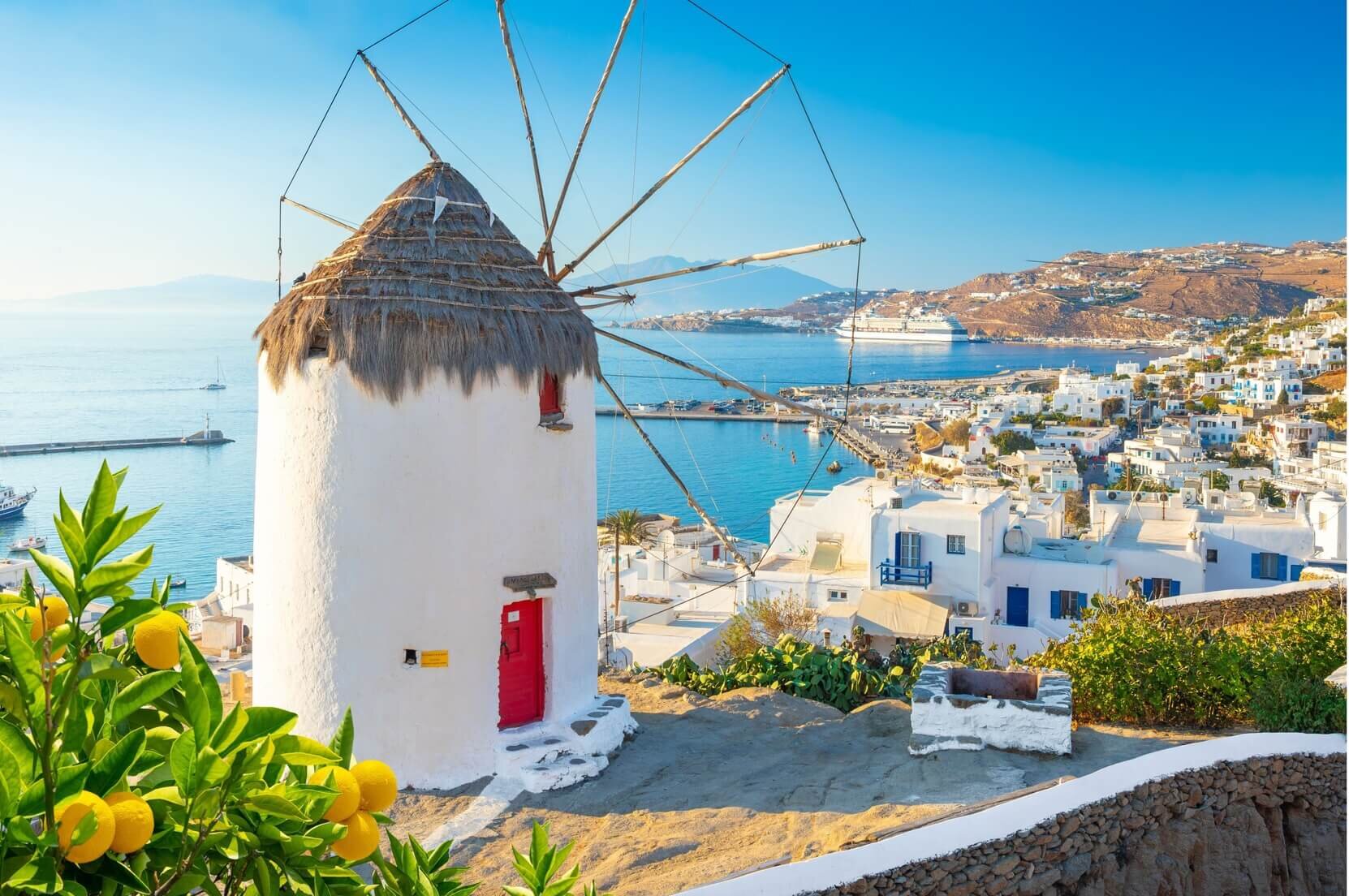
Walk among ancient ruins and marble statues that whisper stories of gods and heroes. Then, return to Mykonos, where iconic windmills and the vibrant waterfront of Little Venice welcome you back. Sip a final sunset cocktail as you reflect on a week of pure Aegean magic.
—
This 7-day Mykonos-to-Cyclades itinerary is more than a route — it’s a journey through the heart of Greek island elegance. From Serifos’s wild beauty to Santorini’s romantic skyline, each stop celebrates the spirit of the Aegean.
Book your Cyclades luxury catamaran charter today, and let your adventure unfold across Greece’s most iconic islands.
7 Days in the Ionian Islands from CorfuEmbark on an unforgettable voyage through the northern Ionian Sea, starting from Corfu, where sapphire waters, lush green landscapes, and centuries of culture blend into one of Greece’s most captivating sailing routes.
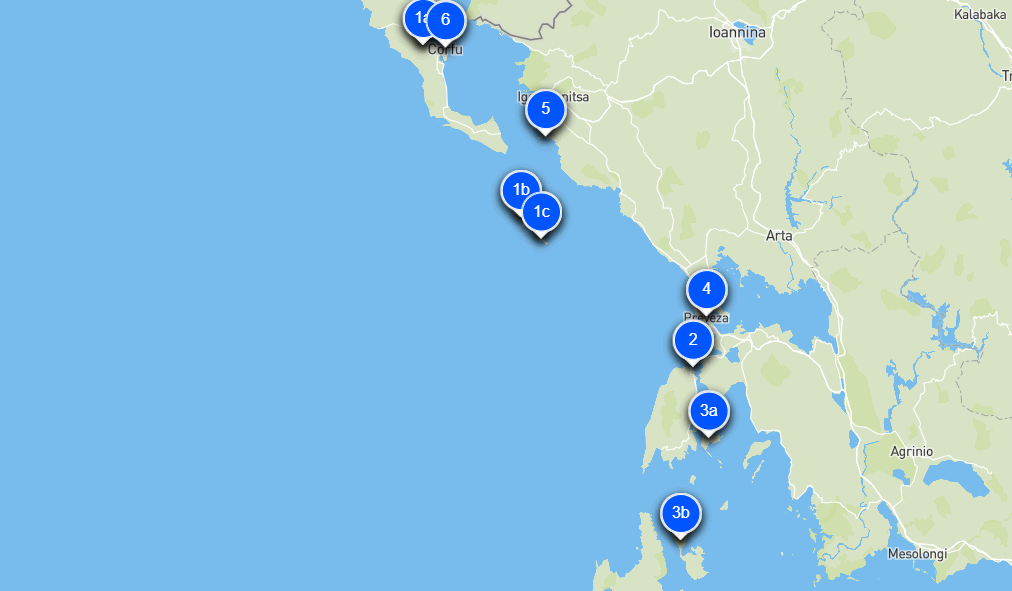
Set sail from Corfu, one of Greece’s most aristocratic islands, and journey south to Paxos.
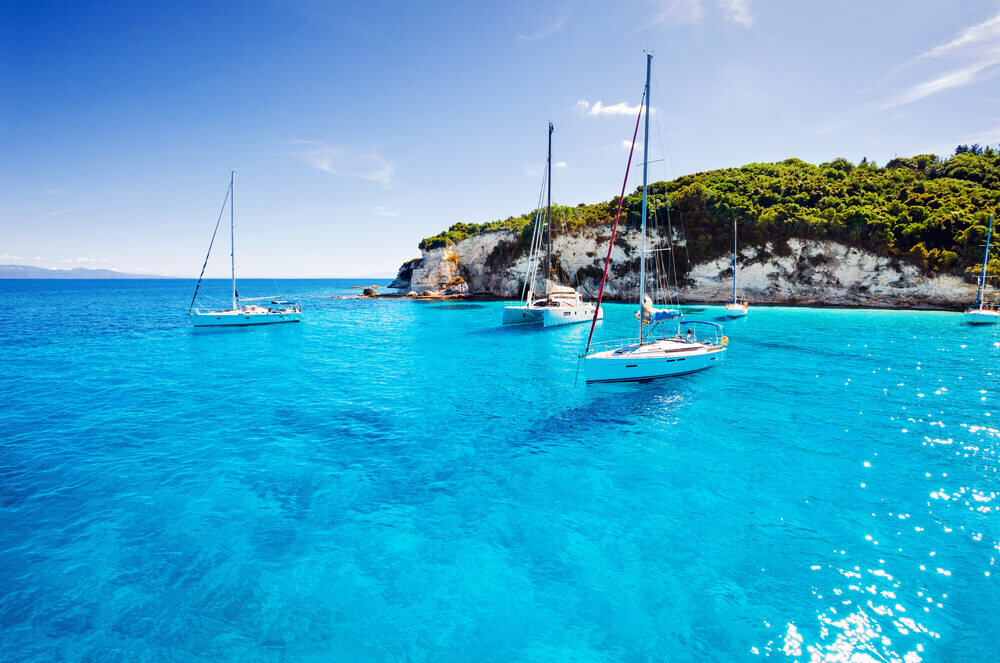
The small island of Antipaxos lies just beyond — known for its crystal-clear lagoons and white pebble beaches that look like they’ve been painted by the gods. Anchor for a swim in Voutoumi Beach, often ranked among the most beautiful in Europe, and enjoy your first evening surrounded by tranquility and stars.
Continue south toward Lefkada (Lefkas), the island of cliffs and emerald bays.
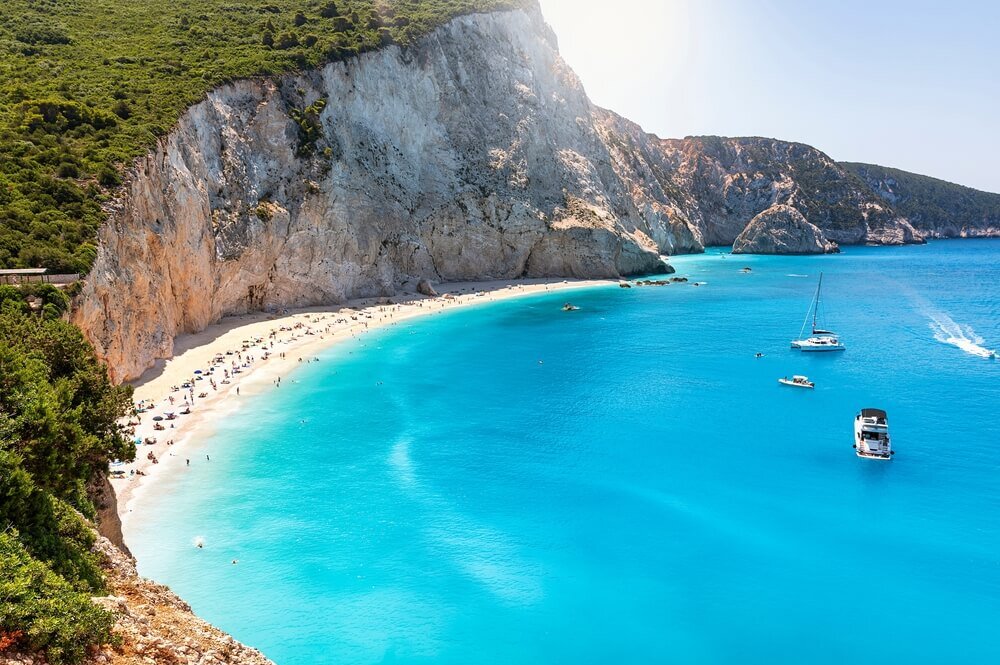
Legend says that the sea god Poseidon created these islands with a stroke of his trident — and the beauty proves it true. Swim at Egremni or Porto Katsiki, two of the most photographed beaches in Greece, and enjoy dinner in a harbor taverna as your yacht rests beneath the stars.
A short sail brings you to Meganisi, a peaceful island untouched by mass tourism.
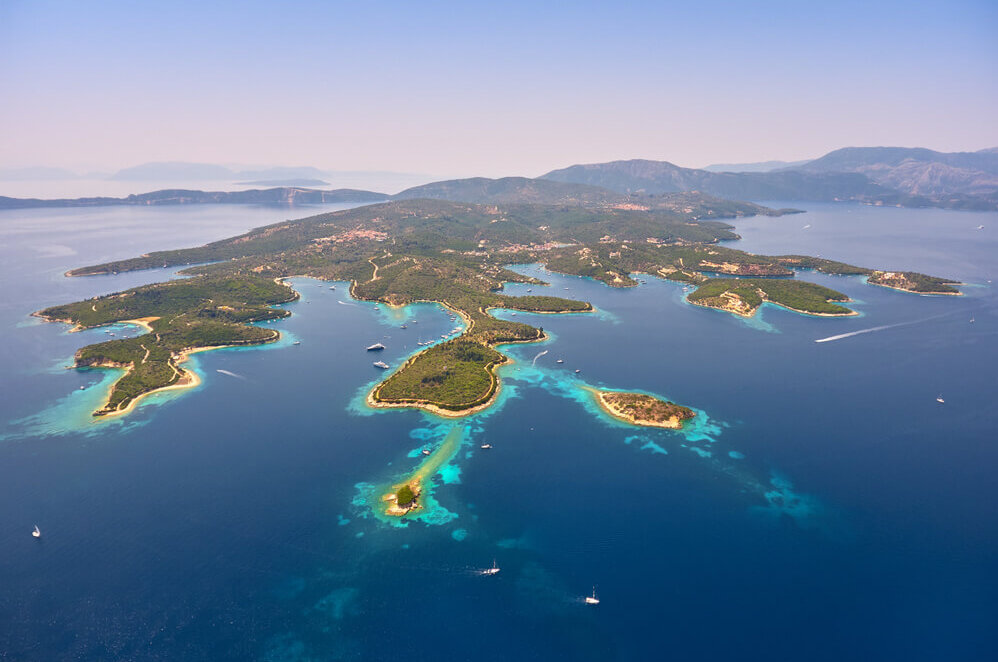
In Vathy village, wander along the harbor promenade lined with fishing boats and tavernas, or swim in the secluded coves of Agios Ioannis and Barbarezou. This is the place to slow down, savor Greek flavors, and enjoy the gentle rhythm of island life.
Sail south to the legendary homeland of Odysseus — Ithaki.
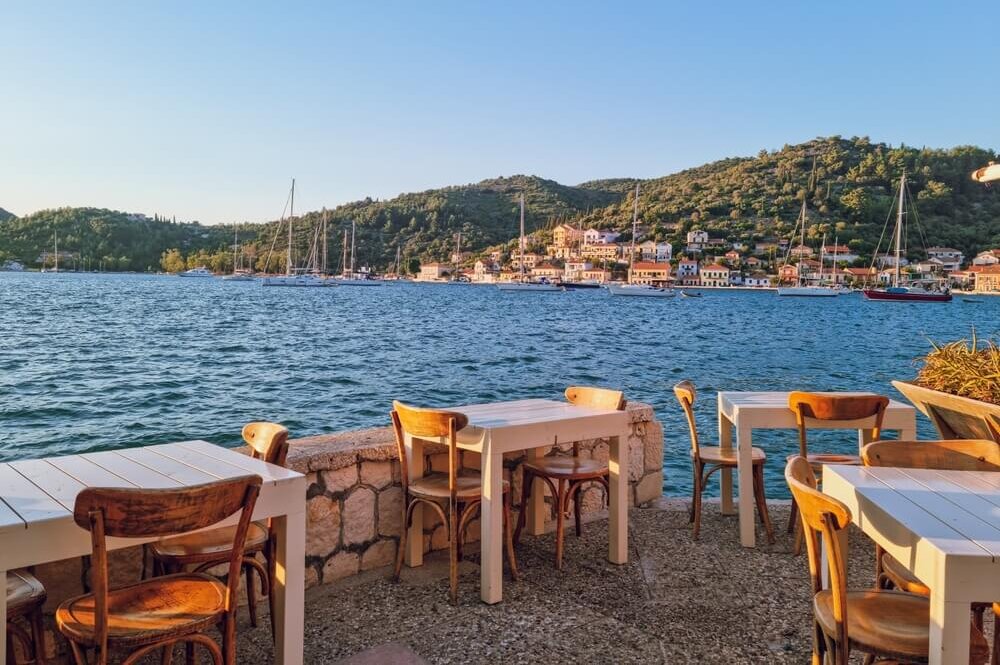
Every bay here whispers tales from Homer’s Odyssey. Explore Vathy, the island’s charming capital, and wander up to Perachori Village for panoramic views over the Ionian. Ithaki’s timeless aura and natural beauty make it a destination of reflection and peace — where myth meets the sea.
Cruise north along the coast to Preveza, a charming seaside town where Ionian authenticity thrives.
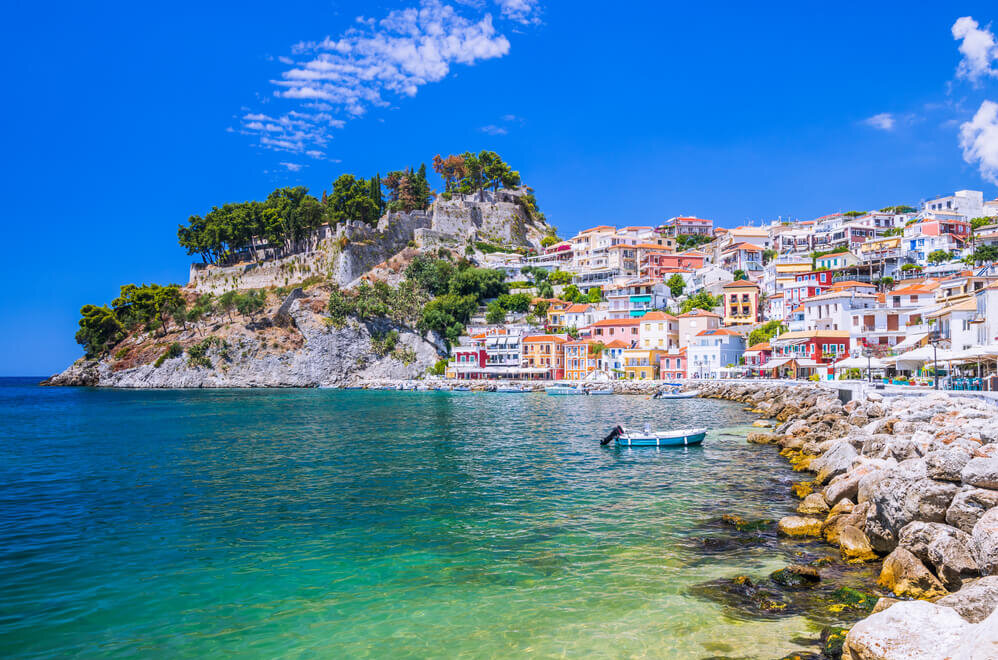
Stroll along its marina and old town, full of neoclassical buildings and lively cafés, or visit nearby ancient ruins like Nikopolis, founded by Augustus Caesar. Preveza’s warm hospitality and tranquil ambiance make it a delightful contrast to the open sea.
Sail to Syvota, often called the “Caribbean of Greece.”
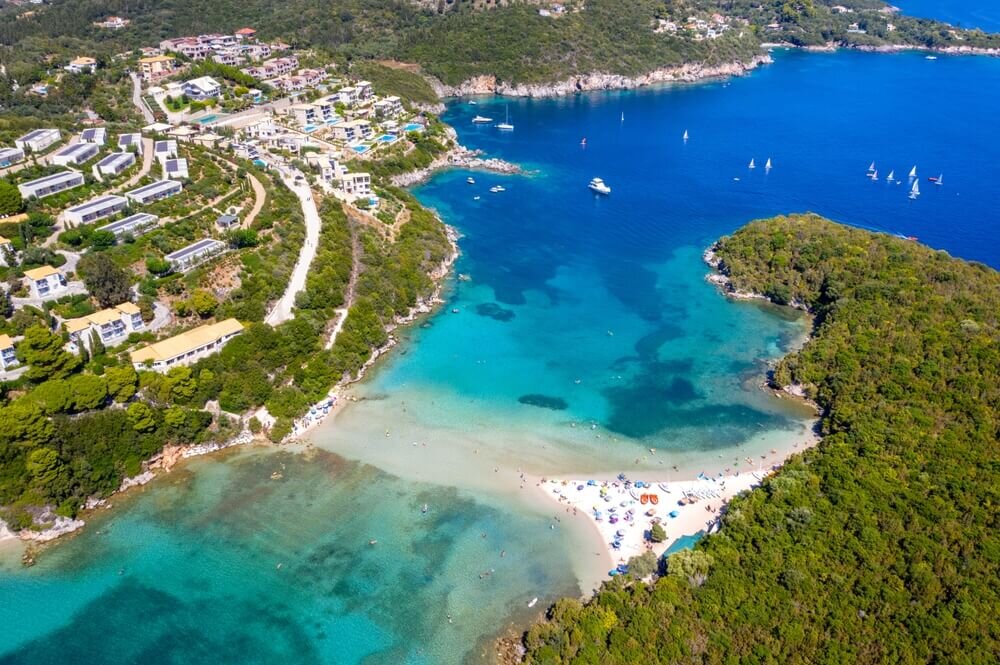
Drop anchor in Bella Vraka or Pisina Bay, two breathtaking spots where nature still reigns supreme. Enjoy dinner ashore with the sound of cicadas and waves as your soundtrack. Anchor in secluded bays for swimming and snorkeling, glide past famous spots like Blue Lagoon and Bella Vraka, and soak in the peaceful Ionian vibes.
Return to Corfu , the island of elegance and heritage.
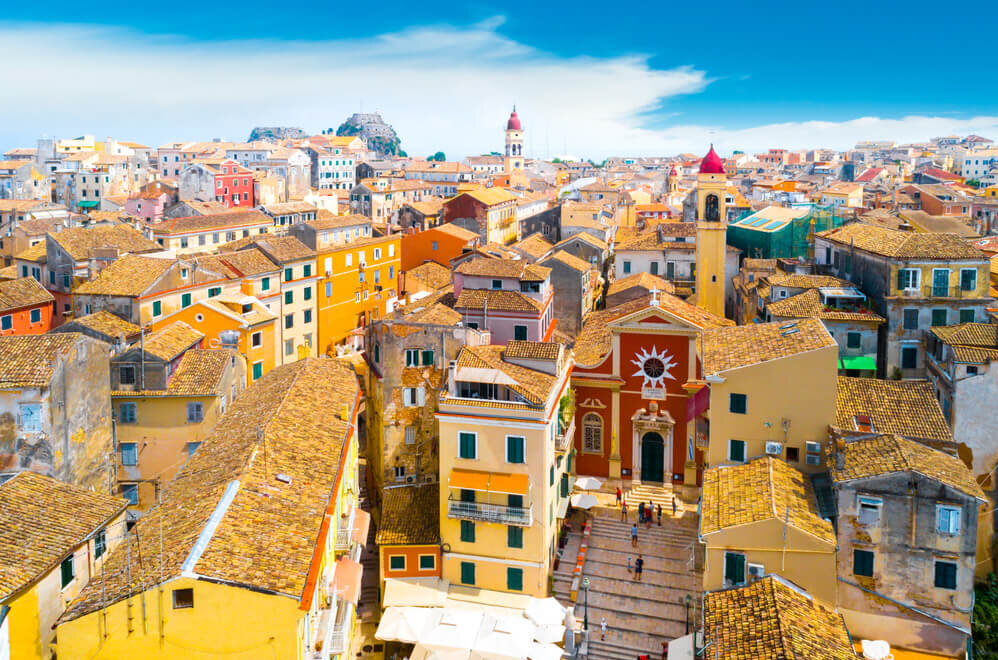
Stroll through Corfu Old Town, a UNESCO World Heritage site, with its Venetian alleys, pastel facades, and lively squares. Relax on a terrace overlooking the Ionian, reliving the week’s memories — turquoise seas, hidden beaches, and the feeling of freedom that only sailing can offer.
—
A Seven days in the Ionian will pass like a dream—Corfu’s golden evenings, Paxoi’s quiet coves, Lefkas’ endless blue. Between wind and water you will find an easy rhythm, shared moments that felt timeless, and left carrying more than memories: a calm that only the sea knows how to give.
7 Days in the Cyclades from AthensStart from Lavrio, your gateway to the Cyclades — a paradise of dazzling blue waters, whitewashed villages, and golden sunsets. From the tranquil coves of Kythnos and the culinary delights of Sifnos, to the volcanic wonder of Milos and the mythic cliffs of Sounio, each destination reveals a different shade of the Aegean dream.
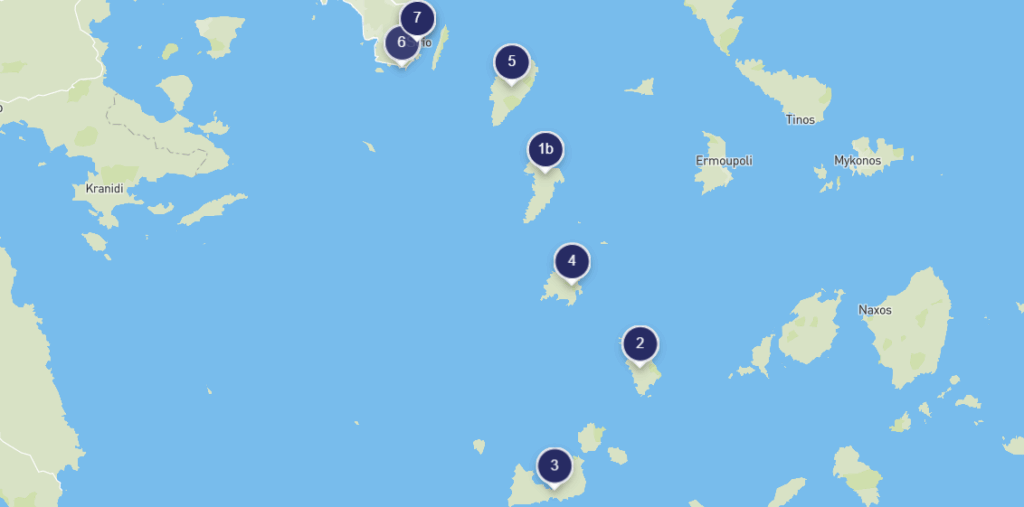
Your voyage begins as you leave the port of Lavrio and cruise towards Kythnos, one of the Cyclades’ most serene gems.
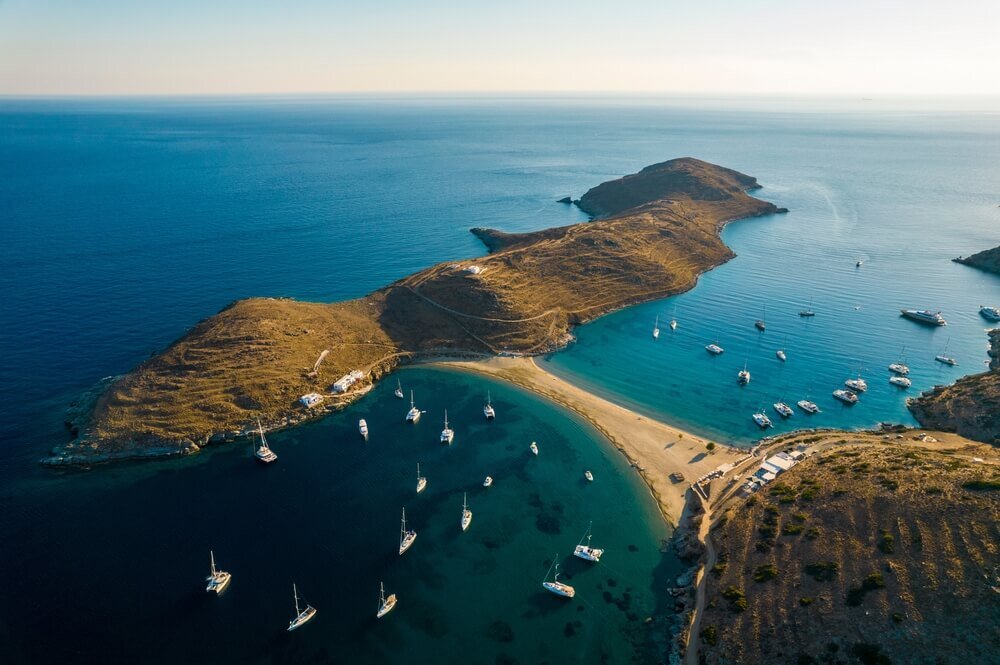
Known for its unspoiled beauty and authentic charm, Kythnos boasts more than 70 beaches — many only reachable by boat. Discover the famous Kolona Beach, a stunning sandbar connecting two pieces of land, or unwind in the Loutra hot springs, where thermal waters flow directly into the sea.
Cruise deeper into the Cyclades to the refined beauty of Sifnos, an island that perfectly balances elegance, tradition, and gastronomy.
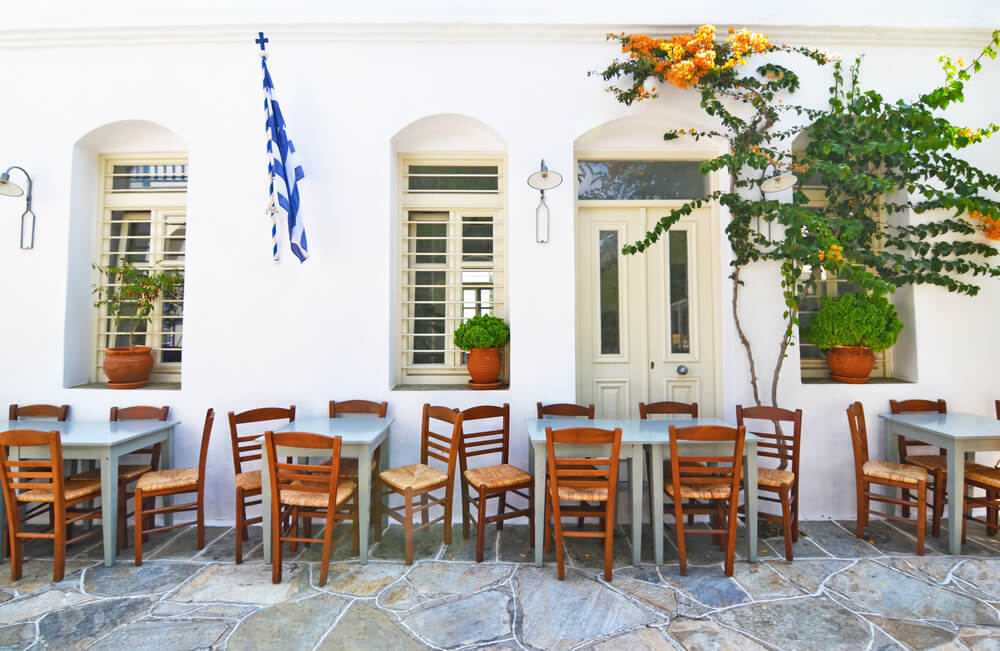
Drop anchor in Platis Gialos or Vathy Bay, swim in crystal waters, and wander through the whitewashed streets of Apollonia. End your day watching the sunset from Kastro, one of the most photogenic villages in the Aegean. Don’t miss Sifnos’s famous flavors — try revithada (chickpea stew) and mastelo (slow-cooked lamb with wine and cheese).
A true highlight of your journey, Milos is the island of colors and contrasts — sculpted by volcanoes and kissed by turquoise seas.
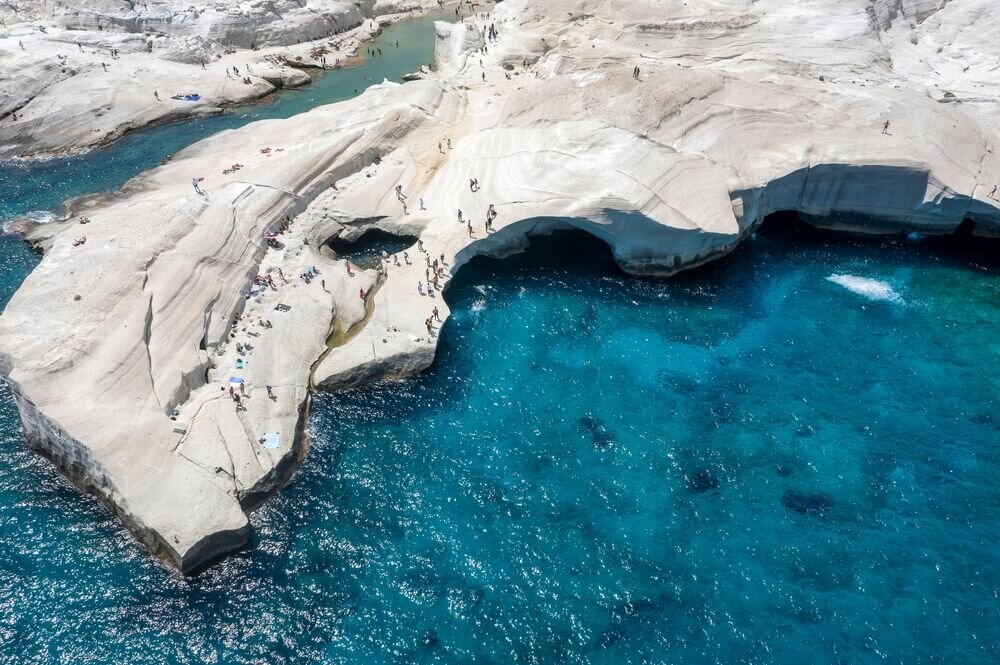
Anchor near Sarakiniko Beach, famous for its white lunar rocks, or explore Kleftiko, where sea caves and secret coves invite snorkeling and exploration. In the evening, stroll along the harbor of Adamas, dine under the stars, and feel the island’s magnetic energy.
Continue to Serifos, a rugged beauty that remains blissfully authentic. Its wild coastline and hilltop Chora create a postcard-perfect setting.
Anchor in Livadi Bay, where you can swim in calm waters or visit hidden beaches like Psili Ammos and Vagia. As the sun sets over the Aegean, enjoy a meal in a seaside taverna — the simple luxury of Greek island life at its best.
Cruise north to Kea (Tzia), where lush hills meet tranquil bays.
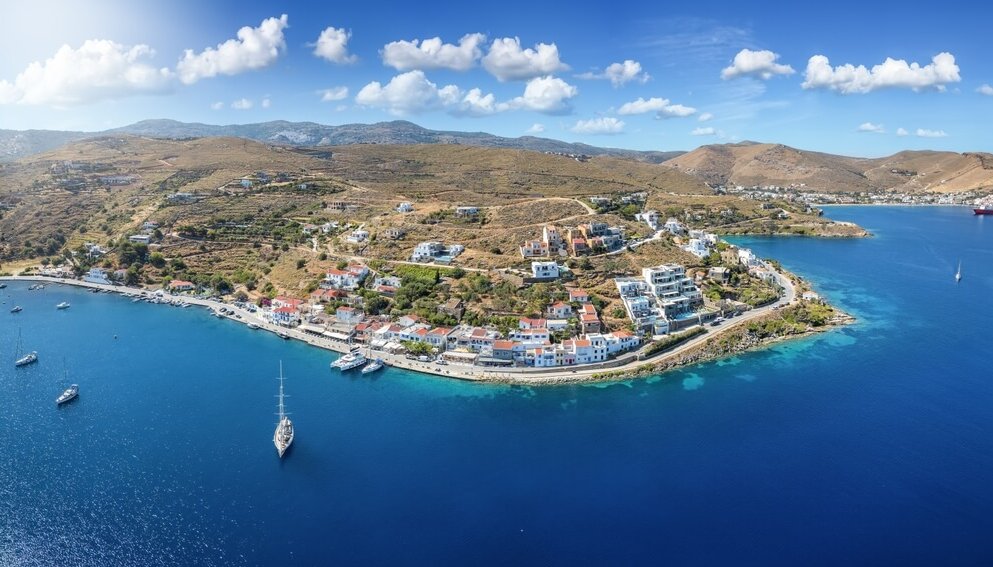
As you enter Vourkari Bay, the scent of pine trees and sea breeze welcomes you. Kea is perfect for a peaceful anchorage, surrounded by nature and elegant simplicity. Explore ancient ruins, hike to panoramic viewpoints, or enjoy a sunset dinner at a cozy seaside taverna.
Your route brings you to the majestic Cape Sounio, where the Temple of Poseidon stands proudly above the cliffs.
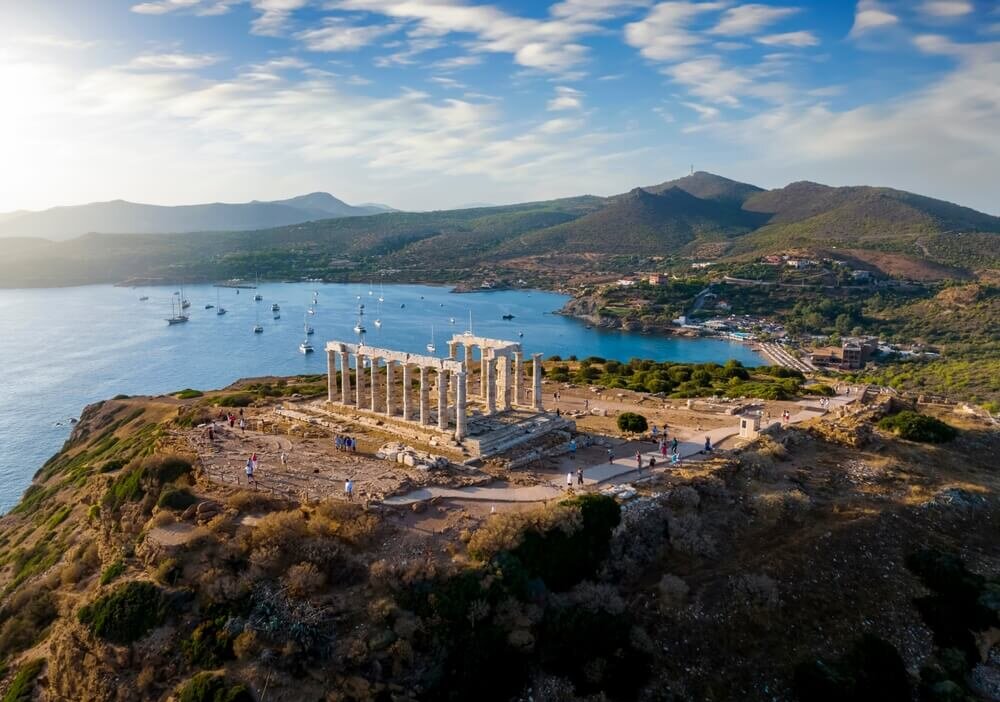
Approaching the Temple of Poseidon at Cape Sounio by yacht is an experience that feels straight out of a myth. Arriving by yacht offers a rare sense of freedom and elegance: the scent of salt in the air, the sound of waves against the hull, and the temple standing watch above it all. Time your visit for sunset, when the sky ignites in shades of gold and crimson, and Poseidon’s sanctuary feels truly alive.
Final stop back to the Marina of Lavrion.
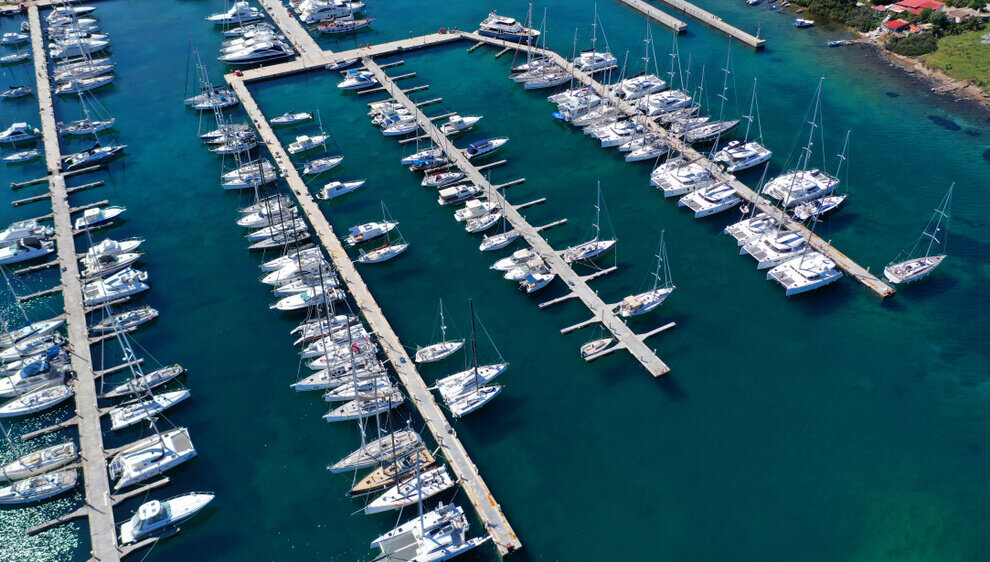
Wander its streets, visit the ancient silver mines, or enjoy a farewell lunch at a waterfront taverna. Reflect on a week of endless blue horizons, hidden coves, and unforgettable Greek moments — the essence of the Cyclades captured in every wave.
—
A 7-day Cyclades itinerary from Lavrio offers the perfect blend of adventure, serenity, and indulgence. From Kythnos’s hot springs to Milos’s moonlit cliffs and the mythical sunsets of Sounio, every stop reveals a new chapter of Greece’s eternal story.
7 Days in the Saronic IslandsGreece has been leading the list of sailing world destinations for years. This itinerary, which will take you around the Saronic islands, will help you discover why.
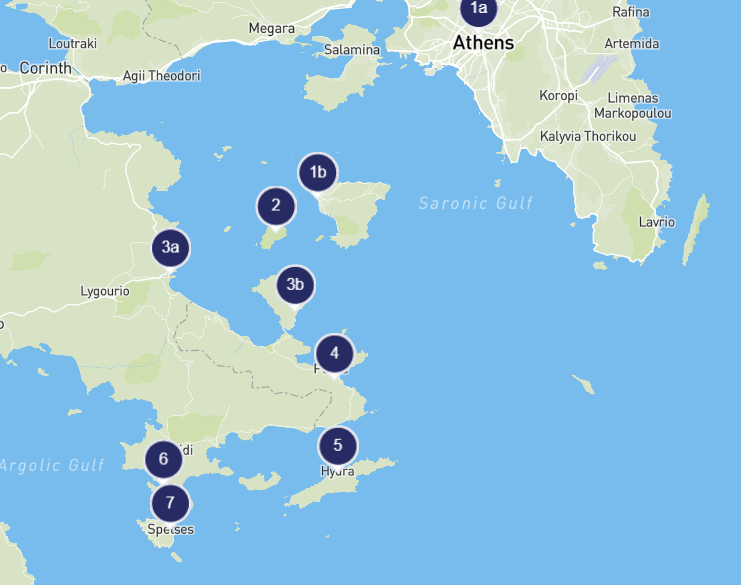
Just an hour from Athens, Aegina is a lovely island with a capital of the same name.
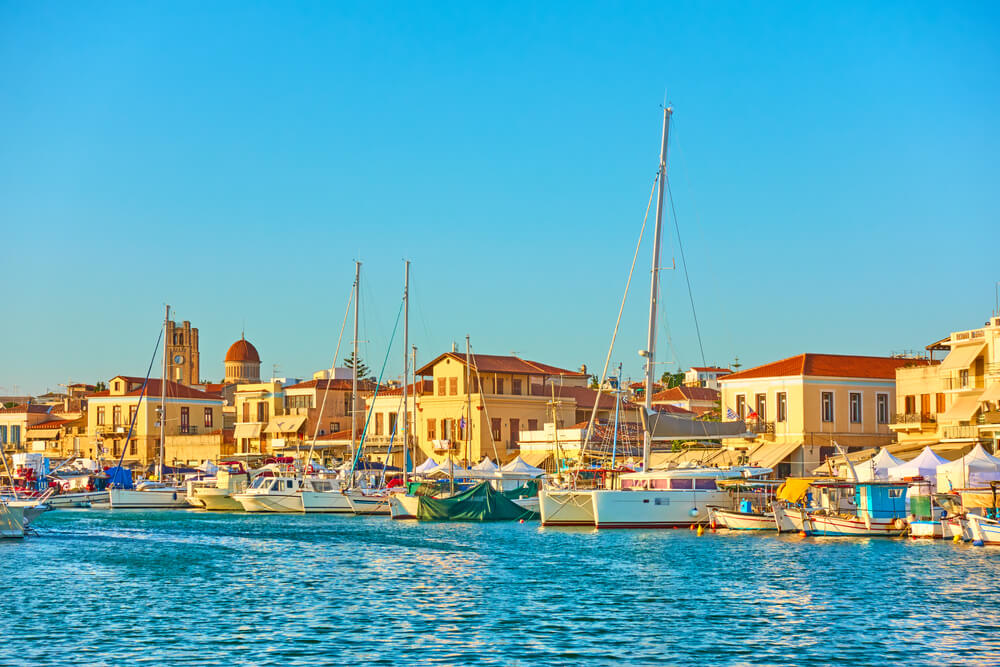
Perdika, the port of Aegina, has beautiful houses with courtyards, stairs sided with flowers, and plenty of delicious fish taverns. If you are lucky, you may even get to see some of the island’s natural inhabitants: wild boar or peacocks! You can also go swimming in the turquoise waters of the Monastery bay! It also has a floating grocery store near the city. Now how often can you see that?
Best for a short day trip, Agistri is a small terrestrial paradise in the Saronic Gulf.
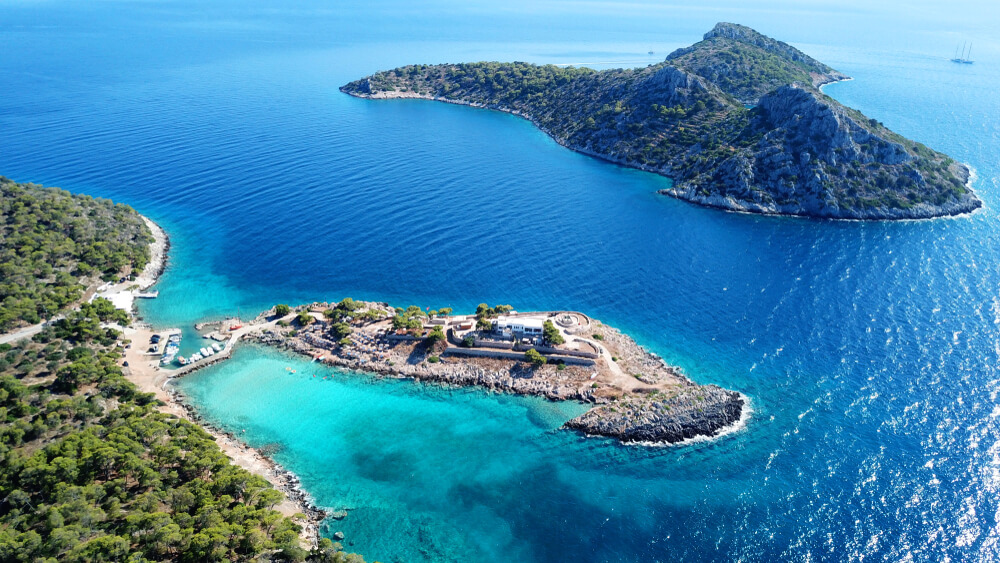
In Agistri, you can find large pine green forests, sandy beaches, and crystal blue waters. Still, there is plenty of nightlife for those who enjoy it. Best for a short day trip, Agistri is a small terrestrial paradise in the Saronic Gulf. Considered the birthplace of entertainment, the theatre, built around 340 to 330 V.C., has perfect acoustics and great beauty thanks to its symmetry.
Methana, a seaside settlement of the Peloponnese, has beautiful beaches and old theatres.
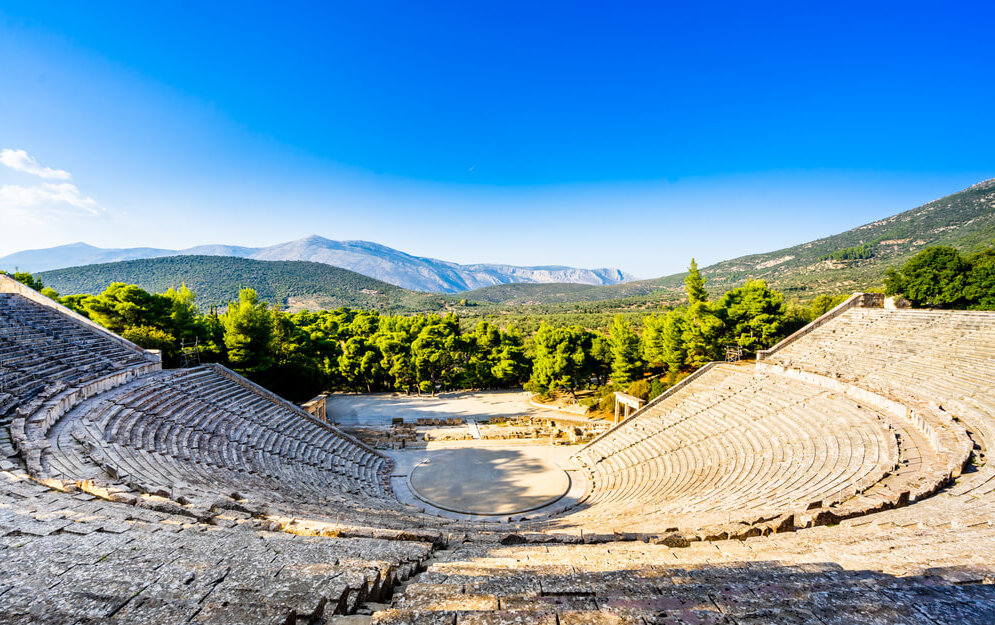
Epidaurus is a place where history and beauty come together in perfect harmony. Famous for its ancient theater, one of the best-preserved in Greece, it’s a site where the past still speaks—literally. The theater’s incredible acoustics allow even a whisper on stage to carry to the very last row, a testament to the ingenuity of its ancient builders.
Poros, also known as the “little Venice” of the Saronic islands, is a tranquil island with many taverns neoclassical buildings, and marinas.
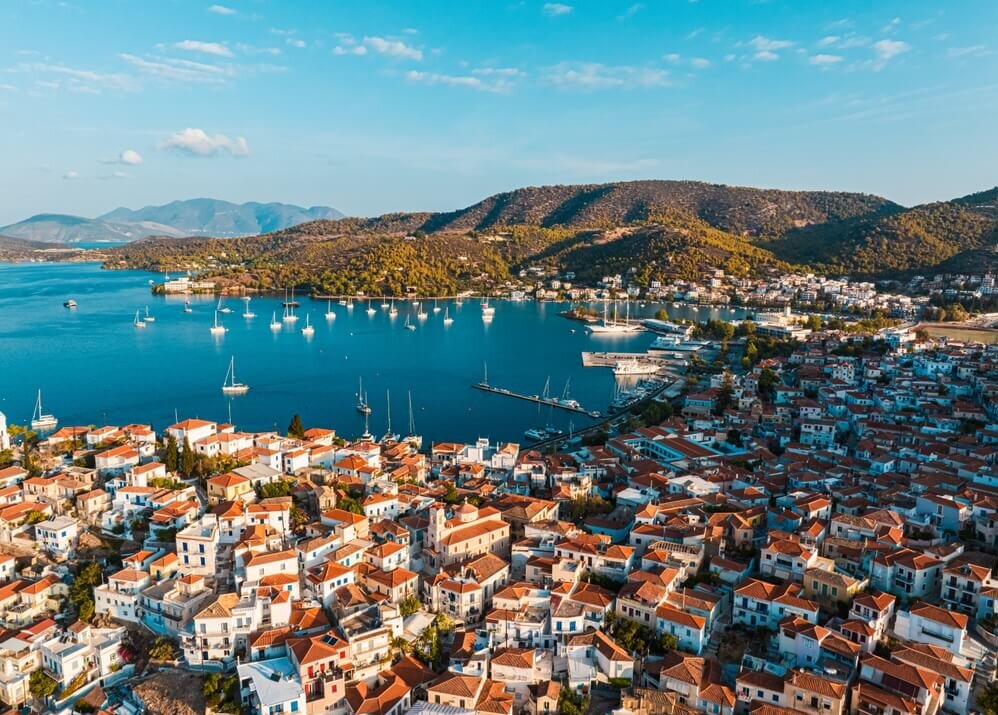
In the evening, there is a very cosmopolitan atmosphere on the island, with plenty of lights, drinks, and music. Chora, the tiny harbor and capital of the island, has its own charm. With neoclassical buildings, narrow streets, and its own lagoon, Chora is a must visit town.
Hydra is one of the most beautiful Greek islands that not only has attracted the wealthy, but also famous artists such as Chagall and Picasso.
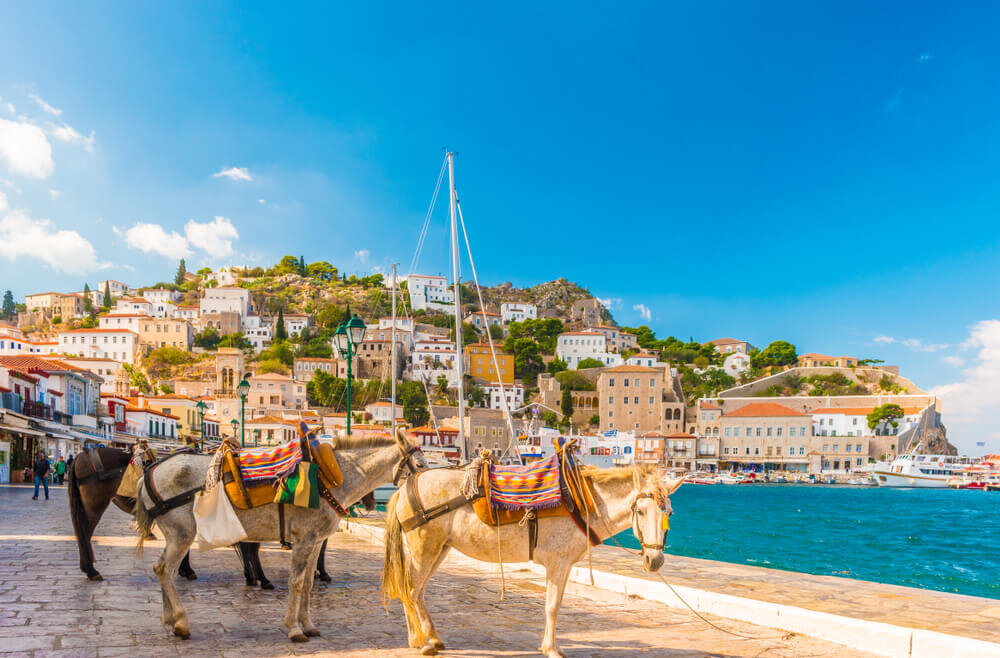
Hydra is pure magic. The city/port is cosmopolitan yet elegant, with 18th-century mansions, old churches, and wells. Life here moves at a gentle rhythm. Mornings begin with coffee by the water, boats drifting lazily in the port, and sunlight bouncing off whitewashed buildings.
Hydra, donkeys aren’t just transport—they’re part of the island’s soul. Meeting a Hydra donkey is a reminder of the island’s timeless pace.
Porto Heli is a cosmopolitan heaven that has it all, from tasteful villas to renowned luxury resorts.
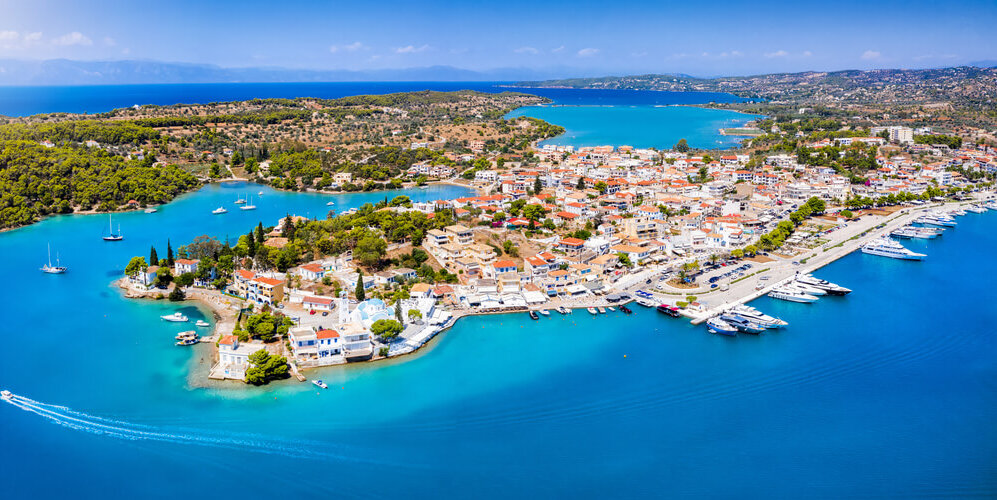
Overlooking the ruins of an ancient city, Porto Heli is also home to plenty of shops, restaurants, and hotels for you to explore. Porto Heli is one of those places that feels effortlessly luxurious without trying too hard. Tucked along the eastern Peloponnese, it’s a laid-back seaside town known for calm turquoise waters, elegant villas, and sunsets that linger a little longer than expected.
Spetses is one of the top travel destinations for tourists all over the world. You can even ride an old wagon and explore the entire island, passing through the Old Port, Agios Nikolaos, and Dapia!
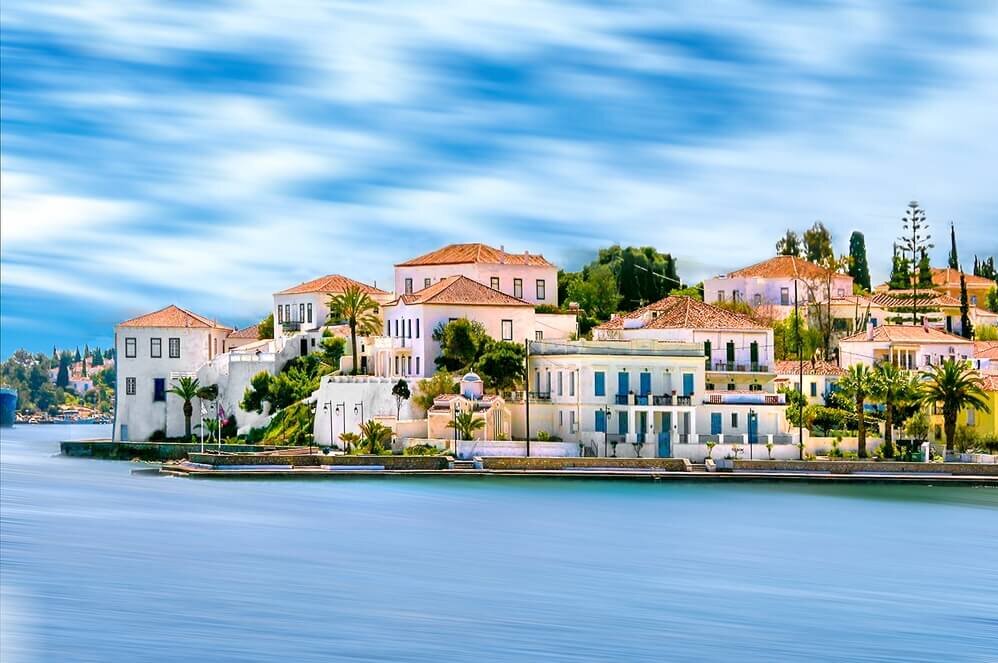
Spetses is one of the top travel destinations for tourists all over the world. You can even ride an old wagon and explore the entire island, passing through the Old Port, Agios Nikolaos, and Dapia! With narrow streets, traditional architecture, neoclassical houses, pebble gardens, and beautiful balconies, Spetses is an island definitely worth exploring. It is also forbidden in Spetses to drive cars, providing a tranquility you’ll hardly find elsewhere.
.–
A catamaran trip in the Saronic Islands is more than just a journey—it’s a chance to relax, enjoy the islands, and soak in the beauty around you. As you step back on land for the last time, you take with you the calm of the sea, the glow of golden sunsets, and the feeling that these islands will always stay in your heart.
The 10 Best Things to Do and See in MykonosMykonos is one of, if not the, most famous islands in all of the Aegean Sea. Bright and cosmopolitan, it has been a magnet of high profile guests since the 1960s.

It is no surprise then that it was voted as one of the top holiday destinations to visit. With its amazing beaches, award-winning restaurants, and mythical parties that last all night long, it is a must-visit destination.


The list of celebrities who visit Mykonos is constantly growing: Harrison Ford, Tom Hanks, Shakira, Lady Gaga, Steven Spielberg, Monica Bellucci, Liam Nisson, Hugh Jackman, Michael Douglas, Catherine Zeta-Jones, Clive Owen, Jean Paul Gotti, Giorgio Armani, Russell Crowe, and many more.
Particularly open to diversity, Mykonos is considered the most gay-friendly destination in Greece and is one of the most popular in the world.

Visit Mykonos Town and marvel at the white cubist architecture which engulfs the island. Mykonos is also home to many old churches and wells. Take a walk through its narrow streets and admire this beautiful city.


Shop in Chora and see the latest collections from brilliant fashion and jewelry designers. You will find plenty of branded clothes and accessories, jewelry, and other fashionable goods.

In Gialos you can see the famous Mycenae Pelicans and visit Aghios Nikolaos town, a town whose town hall was built in 1780!

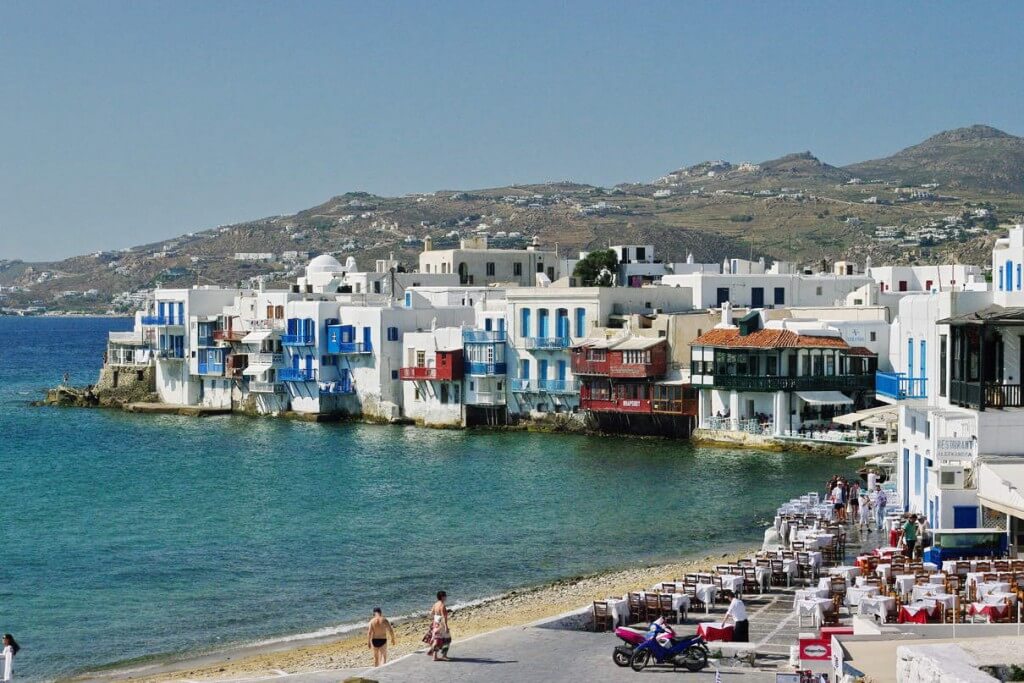
See “Little Venice” and view tiny cute little houses built in the 18th century that have foundations in the sea! It is said that pirates used to come to this island and use the doorsteps of the houses on the water as miniature planks to make people walk off of. Today, the homes are filled with bars and restaurants.

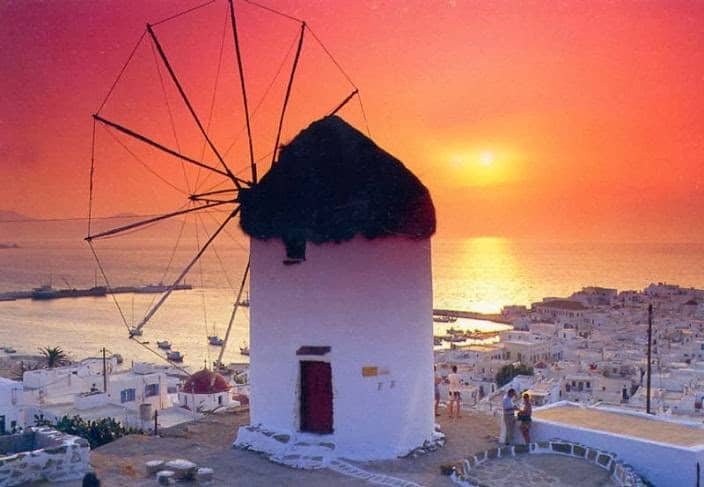
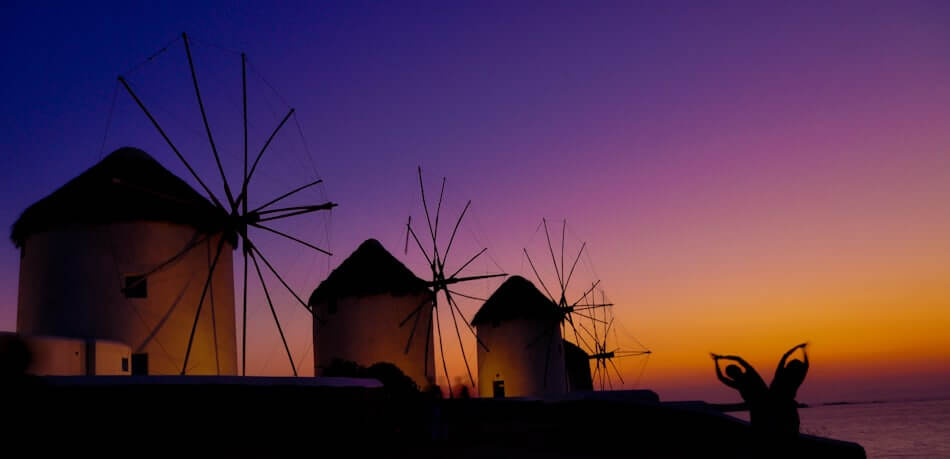
The other trademark landmark of Mykonos, the Kato Myloi windmills, used to grate greats using the power of the north winds until the beginning of the 20th century! In the evenings, they are lit up with a beautiful glow.

Visit the beautiful quiet and secluded beaches of Agios Sostis, Kapari, and Fokos.

If you like busier beaches, however, visit Psarou, Ornos, Paradise, and Platis Gialos where there are parties all of the time!

See this ledgendary lighthouse which stands on the edge of Phanar. Enjoy stunning views of sunsets as you relax!

Scuba dive and see octopi, starfish, sponges, and maybe even Monachus-Monachus seals! There are many diving centers on the island which offer diving in reefs, caves, and even shipwrecks!

Visit Rinia and dive into its crystal clear blue waters and spend time relaxing on its beaches.

Visit Delos, what is considered the island of Apollo, the god of light, and visit its archeological sites.

Tradition says that anyone who drinks the water from the wells in the center of the village will never leave the island!



Enjoy!
————————————————————————————————–
Itinerary: 7 Days Through the Cyclades IslandsThe Greek islands are a must-visit destination for any traveler. Indeed, the Greek islands have topped countless lists as a top destination around the world. In this itinerary, we lay out for you a plan to go from Athens to Mykonos and see the most spectacular highlights the Greek islands have to offer.
The Athens Riviera is a coastal area in the southernmost suburbs of Athens. On this sailing route, you will find the most cosmopolitan beaches of Athens, including Alimos, Glyfada, Vouliagmeni, Lagonissi and Varkiza.
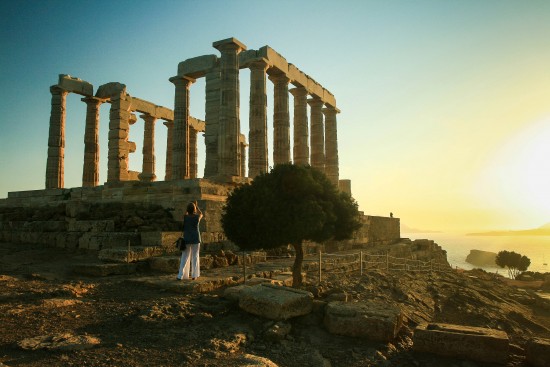
Cape Sounion is located 69 kilometers (43 miles) southeast of Athens, at the southernmost tip of the Attica peninsula in Greece. Recently, the wider region of Cape Sounion was declared a national park, and is now protected by the Greek government. Cape Sounion is also home to the ruins of the ancient Greek temple of Poseidon, the god of the sea in classical Greek mythology. From the ruins, one can view the sunset over the Aegean Sea, a famous and beautiful view that many travel to see.
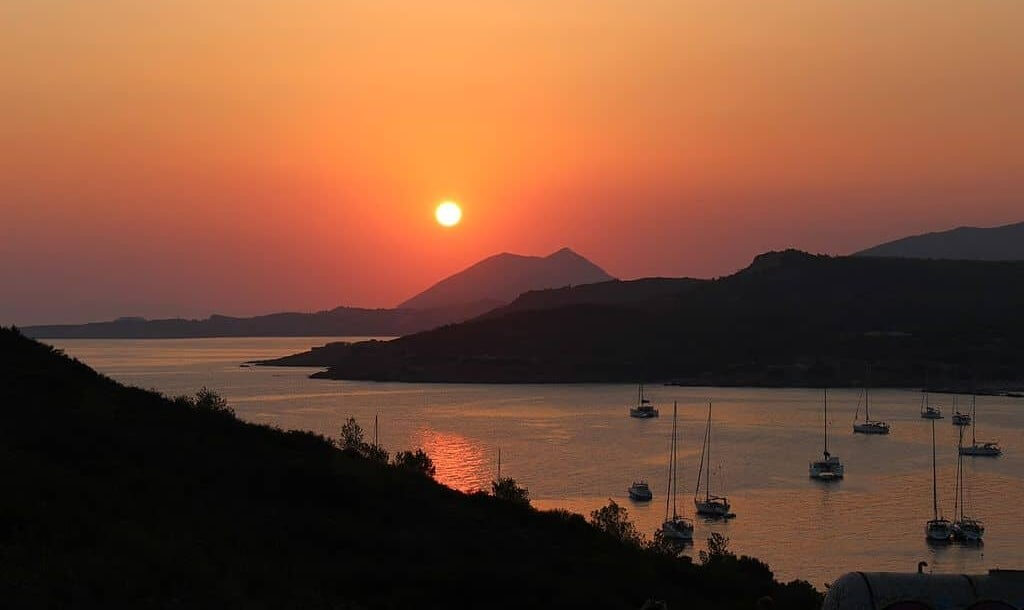
Kythnos, located in the Western part of the Cyclades, has perhaps the most beautiful beach out of all the Greek islands. This beach, a crescent- shaped isthmus, has extremely fine sand and warm thermal springs at Loutra bay, which are told to have healing properties.
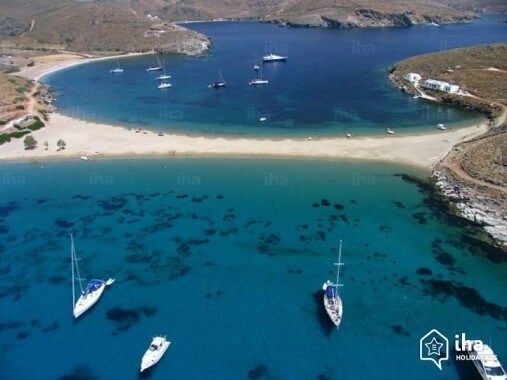
Kythnos also has picturesque villages with cobblestone streets and white houses with blooming flower courtyards. Kythnos is warm, friendly, and simple. Walk through its quiet neighborhoods and dine on fresh food at waterfront tables.
Syros is located 144 kilometers (78 miles) southeast of Athens. Its capital, Ermoupoli, is a neoclassical town and one of the most beautiful settlements you will encounter in the Cyclades. Syros’s Roman quarter is home to the fortress-like St. George’s Cathedral. Go up to the top of the hill the Cathedral sits on, through the narrow streets, past the traditional whitewashed houses, and through the archways and open spaces to catch a breathtaking view of the entire island.
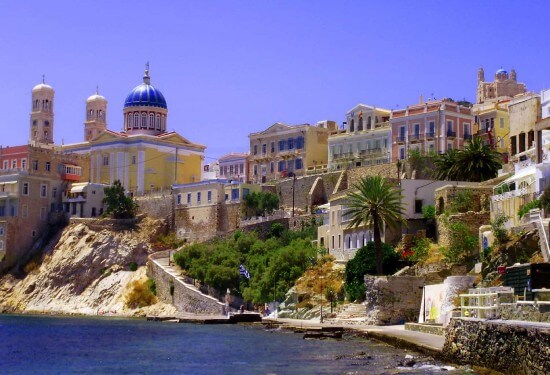
Syros also has beautiful architecture, such as the churches of St. Nicolas the Rich and Dormition of the Mother of God. On the hill that St. George’s Cathedral sits on, also sits the remarkable medieval settlement of Ano Syros, built during 300 AD.
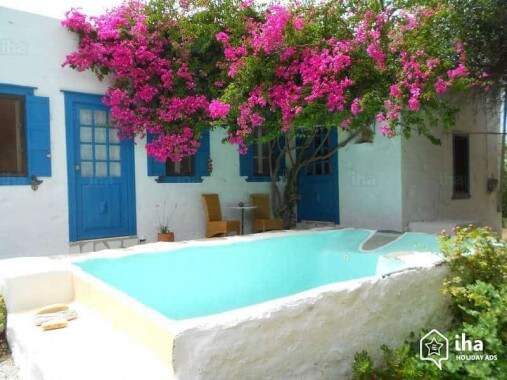
3rd DAY: MYKONOS
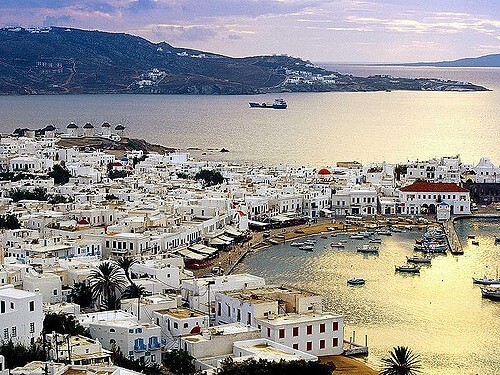
The most famous island of the Aegean, Mykonos is bright and cosmopolitan, with exciting nightlife and stunning scenery. With its stunning beaches, award-winning restaurants, endless fantastical parties, and dream villas, it is no wonder Mykonos has been voted one of the top vacation destinations worldwide.
If the Mykonos nightlife scene isn’t for you, don’t worry. Mykonos is also home to the Ano Mera Village, a calm, authentic, and picturesque town home to the historic church Panagia Tourliani as its main attraction.
A very diverse island, Mykonos has become the most gay-friendly destination in Greece and the most popular in the world.
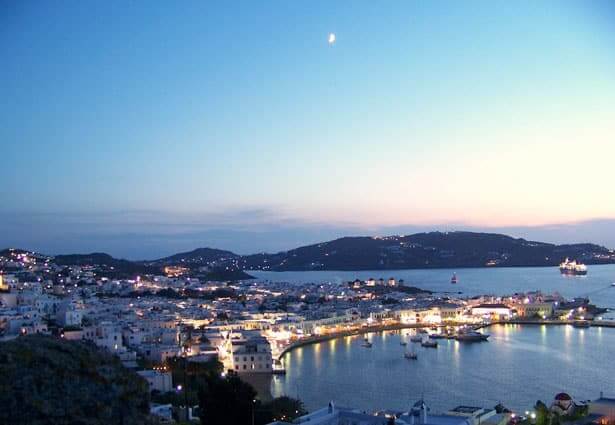
Mykonos is also home to Little Venice, and its houses (which were built in the 18th century) have foundations in the sea! Today they offer bars, restaurants, and stunning views of the Aegean from their balconies.
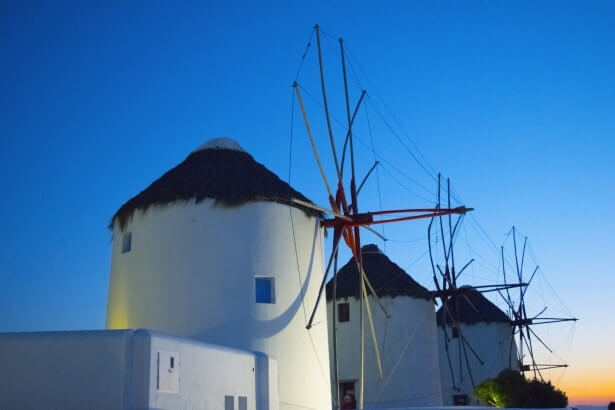
The other trademark of Mykonos are the Kato Myloi, a series of windmills, that, built by the Venetians in the 16th century, milled flour up until the mid-1900’s. Today, they are home to locals and serve as vaults to numerous Mykonian heritage documents.
Moreover, Mykonos has tons of scuba diving, and its waters are home to some amazing creatures, including octopus, starfish, and Mediterranean monk seals! There are countless companies which offer diving expeditions through reefs, caves, and even shipwrecks!
4th DAY: MYKONOS – DELOS & RHENIA ISLANDS
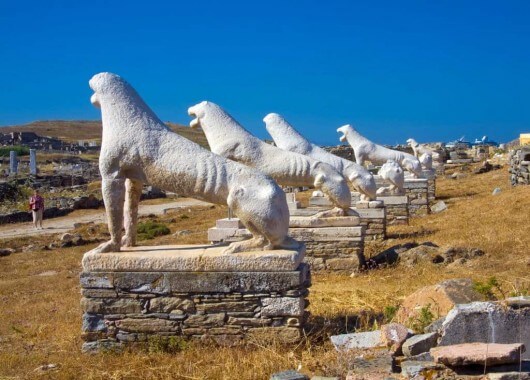
Delos is one of the most important mythological, historical, and archaeological sites in Greece. Dolos is the birthplace of the twin gods Apollo and Artemis and has been a holy sanctuary for a millennium. Admire beautiful archaeological sites and watch the unique sunset on the island of the god of light, Apollo.
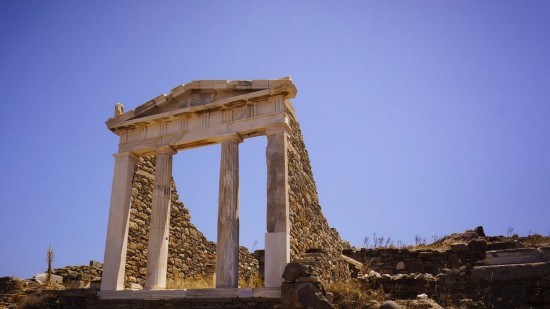
Charter your boat in Rinia, where you can dive into blue waters and cool off in the fresh air. Rinia is a peaceful, almost deserted island where one can recharge and catch a break from all the noise.
Naxos is the largest, most fertile, and self-sufficient island of the Cyclades. In the harbor, one is welcomed by Portara, a large marble frame and an ancient Apollo Temple, along with a view of a medieval castle. The island has a history dating back centuries, unique sights, varying landscapes, and delicious food.
A visit to Naxos is not complete without the exploration of the picturesque countryside and the mountain villages of the island which have been inhabited for centuries.
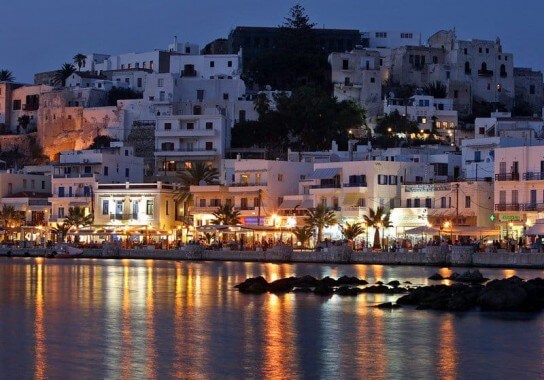
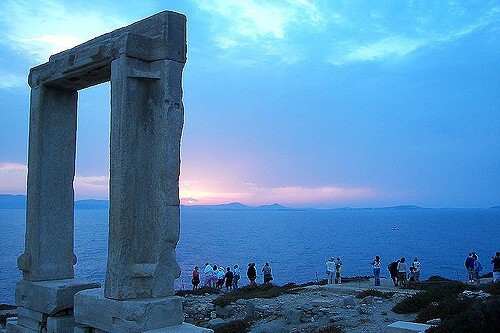
Naxos was rated the sixth best island in the world and the number two place to visit in Europe according to TripAdvisor, the popular travel site’s, users. It is also described as a critical culinary destination because it produces some of Greece’s most famous exports including many Greek cheeses.
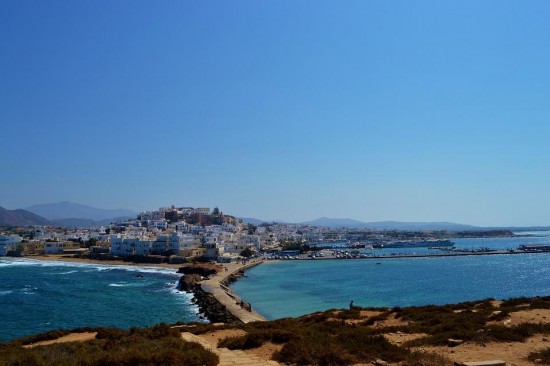
Koufonissia is a well-hidden terrestrial paradise that is also definitely worth visiting. Filled with quiet beaches and caves, Koufonissia is an excellent place for relaxation and time to oneself.
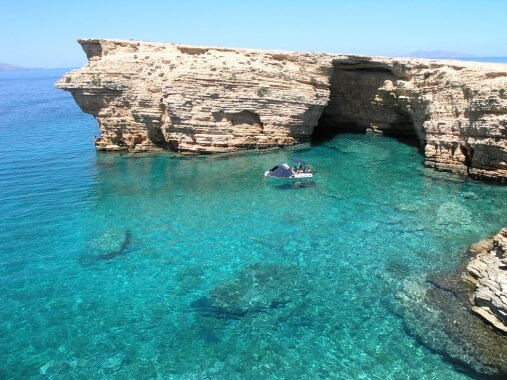
Koufonissia, with its crystal clear waters, has plenty of opportunities for beautiful Mediterranean diving. With dreamy landscapes and tranquil music, Koufonissia is one of the most peaceful places to explore.
6th DAY: PAROS or SIFNOS
Paros also has beaches with crystal clear waters and magnificent beauty Also in Paros however, you’ll discover Byzantine footpaths which which connect traditional villages like Naoussa, a colorful village where the ruins of a Venetian fortress stand at the entrance to its small harbor. Naoussa is also home to exquisite shopping opportunities in the town’s narrow alleyways and fine dining along its shores.
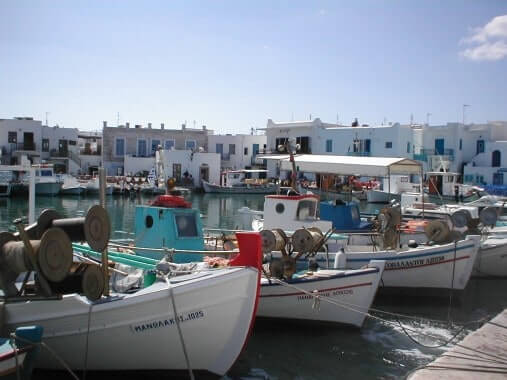
Sifnos combines picturesque views with folk art and tradition. It has many medieval remains and contains 360 churches, for the number of days in a year.
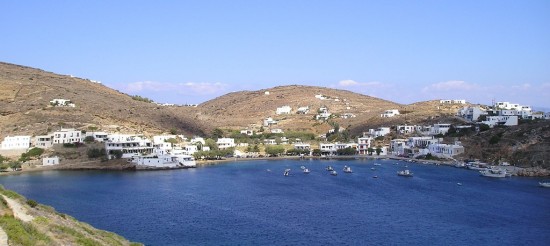
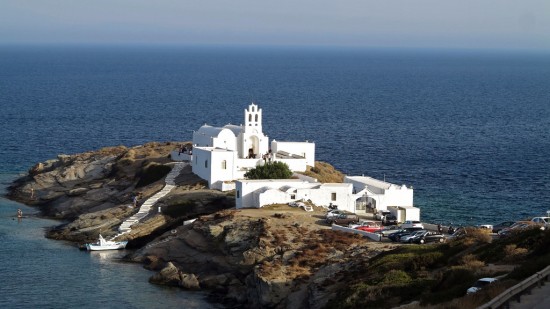
Sifnos is an island famous for its architecture and its beauty. Elegant but simple at the same time, Sifnos is full of stunning, pure beauty.
7th DAY : SERIFOS to ATHENS
Serifos is the ideal place for taking a stroll or stopping into one of its cafes, fish taverns, or pastry shops located next to the sea. Chora, Serifos’s capital city, was built on a rocky hilltop overlooking over the rest of the island, and houses a Venetian castle built in the 15th century. The most beautiful architectural building on Serifos however, is the ancient Hellenistic marble watchtower Aspros Pirgos, or “White Tower.”
Simply put, Serifos has beautiful, simple Cycladic architecture that has remained unchanged for centuries.
With magnificent views, archaeological wonders, and fantastic adventures, you’re sure to love this itinerary which takes sailors to all of the must-see Greek islands.
Enjoy!
————————————————————————————————
Greek islands: How to choose the right one for your holiday (CNN)(CNN) — Greece’s 1,400 islands — 230 of them inhabited — are one of the Mediterranean’s most beautiful assets. From the Ionian, up by Albania in the northwest, to the Dodecanese, near Turkey in the southeast, they offer vacations you can’t get many other places. Each of the island groups has its unique allure, plus some of the most picturesque seascapes on Earth. But for sheer variety in a small radius, proximity to Athens’ ferry port at Piraeus and the best inter-island boat connections, none compete with the Cyclades. We present the top nine islands in and around the Cyclades, each with its marquee attraction (for ferry schedules, check www.gtp.gr or www.greekferries.gr).
The story behind this island is the stuff of legends — in 1600 BC after a volcano erupted and its center collapsed into the sea, it left behind parts of its caldera that today form the island Santorini. The views from pretty much anywhere on this crescent-shaped outcrop are superb. Sheer rock faces are striated in multitudinous shades, villages and towns cling to the tops of cliffs, the caldera is filled with clear deep turquoise water home to the visiting cruise liners. The whitewashed buildings in the main town Fira resemble a fresh blanket of snow atop a mountain.
On the northern tip, at Oia, where the sunsets are outstanding, houses, hotels and churches tumble down the rock walls. Every evening bus loads of tourists descend to watch the sun sink into the Aegean. The scenery is as just impressive at sea level. Red Beach, as the name suggests, has a rust-colored backdrop and Mars-esque boulders, Eros Beach’s eerie hoodoo-like walls would fit right in at a national park in Utah, and Caldera Beach, the only one that faces in toward the caldera, gives visitors a discernible sense of the volcano’s immensity.
Where to stay: Vedema, in the village of Megalochori, doesn’t have a caldera view, but its setting in a small village feels authentic (the town square and village church are a one-minute walk away). The 45 rooms have views of the village homes or the surrounding rolling vineyards. If a vista of the caldera is key, check in to sister property Mystique. Set in Oia, it has a secret wine cellar, and its 22 cave-style rooms are terraced into the cliff face, providing that classic Santorini experience.
Vedema, Megalochori, 84700, Santorini; +30 22860 81796; doubles from $320
Mystique, Oia, 84702, Santorini; +30 22860 71114; doubles from $470
10 gorgeous Mediterranean islands you probably haven’t heard of
Mykonos is Greece’s answer to Ibiza, but without the attitude and posturing. Either side of the summer season Mykonos resembles another low-key beach destination but come July and August, night owls arrive in droves, and the main streets of Mykonos Town are packed with revelers — even revelers with babies strapped into carriers. At times the narrow alleys are so jammed with bodies the only way to move is en masse with the crowd as it sways through the streets in a singular motion.
In true Greek style, nothing here starts until late, though you can party in the daytime with 20-something Italians at Super Paradise beach. A popular start is to have drinks at sunset at the Sea Breeze Cocktail Bar in Little Venice, snagging a table up the steps for the best views. Across the island at Kalo Livadi you can find an unfussy beach where the new Nice n Easy bio-restaurant has fantastic organic fare at reasonable prices (the pasta with sharp kopanisti cheese is excellent).
Back in town, Jackie O’ is a lively waterfront bar that draws the gay crowd, Agyra Bar has attractive, hard-bodied staff from Athens and at the always packed Rock ‘n’ Roll, where local and tourists are evenly split, the bartender blows a whistle before doling out oxygen shots.My personal favorite is the bar/club Caprice, where all are united in their mission to just have fun, no judgments, no agenda; the barmen are as much into the music and dancing as the customers (they’ll readily pour free shots of jelly liqueur). Tip: At Caprice, many a first-timer falls into the area where the bar stools are, set one step down from the rest of the floor, so tread carefully.
Where to stay: Hotel Kivotos, on Ornos Bay, is removed from the hubbub, set on a hill with steps down to a peaceful rocky beach, and is an ideal refuge to refuel and recharge. The cool rooms have clear Lucite chairs, LED lights in the floors (sounds tacky, but looks appropriately festive), a pool with a small circular bar, and most importantly, an energetic, attractive young staff that will give you the scoop on the best night spots.
Hotel Kivotos, Ornos Bay, 84600, Mykonos; +30 22890 24094; doubles from $590
The largest island in the Cyclades has a string of swoon-worthy beaches on its west coast, a Venetian castle in its main town, some interesting ruins and great local produce and dairy. But what sets it apart from the other islands are its traditional villages. When you leave Chora, where the ferries berth, the pull of village life is evident — note the sign at the outskirts of town that simply reads “Villages.” There are 46 of them on Naxos, some miniscule, but all a window into traditional life.
Each has a bakery or cafe, a village square where old men with sun-creased faces sit around on tables drinking coffee and trading stories and an immaculately preserved church or two. The hamlets are tucked among the hills and the switchback road that crisscrosses the island. Kinidaros is famous for its bakery (the best on the island, the oven fired by wood) and musicians; Chalki has the excellent artisanal jam shop Era; locals come to the cobble-stoned streets of Apeiranthos to eat the crepes at Samardako; Keramoti sits in a valley, seemingly cut off from civilization, but it’s also the base for hikes to Routsouna waterfall. Since most tourists don’t venture inland, the villages haven’t succumbed to money-grabbing gimmicks.
Where to stay: Set away from the coast, Naxian Collection has good views of Chora, a handful of typical Cycladic white cubist villas with private pools, an on-site organic garden with fresh strawberries and breakfasts large enough to keep you going all day. The likeable owner Ioannis Margaritis was born and raised on the island, so he knows everything about, and everyone on, Naxos — literally. If you’re lucky, he’ll take you to a barbecue at his friend’s house in one of the villages.
Naxian Collection, Stelida, Naxos; +30 22850 24300; doubles from $325
The constant wind on Paros is evident as the ferry approaches the island — you can see giant turbine fans steadily cartwheeling on the north coast. While Paros might be as cosmopolitan at Mykonos (without the Louis Vuitton and Diesel stores) and pretty enough to attract Hollywood royalty (Tom Hanks purchased a house in the neighborhood, on sister island Andiparos), the real draw here is the force of nature. During the summer, the Meltemi winds blaze down through the Aegean, supplying welcome breezes for beachgoers, but also creating conditions ripe for windsurfing and kiteboarding. The winds peak in intensity during July and August; the five-mile channel that divides Paros from its neighbor Naxos funnels the Meltemi to glorious effect.
The main beaches for the sports are Pounda on the west of the island and Santa Maria, Golden Beach (Chryssi Akti), and New Golden Beach (Nea Chryssi Akti) on the east (New Golden Beach’s winds are so reliable that The Professional Windsurfers Association held its World Cup there for six consecutive years in the 1990s). For newbies, mornings are the best time to learn, when the wind is steady but tame. By early afternoon, when the gusts pick up and continue till dusk, pro boarders and windsurfers skim and bounce along the water. Established operators include Paros Kite Pro Center, Force 7 Paros, and Paros Surf Club. Visitors should time their visit around the island’s most important festivity, on August 15, celebrating the Virgin Mary’s ascension to heaven and culminating in a giant fireworks display mounted on boats in the bay of the port town Parikia.
Where to stay: Poseidon of Paros mixes whitewashed Cycladic architecture with flagstone walls, and is strategically poised between Golden and New Golden beaches (you’ll see windsurfers shredding the water during afternoon drinks). The place also does a steady business with weddings.
Poseidon, Golden Beach, 84400, Paros; +30 22840 42650; doubles from $130
‘Wolves of the sea’: The vanishing fishermen of Greece’s Paros island
Every islander has their favorite beach, but none of the Cyclades promises the number and diversity of beaches as volcanic Milos. Some have white sand, some black, some are rocky, others offer the satisfying sensation of crushed shells underfoot, with water ranging from emerald to aquamarine to cobalt blue. With a heavily indented coastline (on a map Milos resembles a mutated crab) and pretty little coves at every turn, Milos has about 80 fine beaches, many only accessible by boat. While each has its charm, some should not be missed. Sarakiniko, a beach of brilliant white pumice, looks truly otherworldly (many liken it to the moon). The three beaches of Paliochori are cupped by towering rock formations, its pebbles are multicolored and the sea water has warm pockets where it’s fed by hot underwater mineral springs.
The small Tzigrado beach is flanked by headlands, and can only be accessed by boat or by a ladder down the cliffs. A cave borders the even tinier Papafragas beach, while the rock walls that enclose it give the water the appearance of a river starting in the sand. At Paliorema beach you can wander around an abandoned sulfur mine plant, see the wagons used to transport the chemical and look for sulfur crystals growing among the rocks.
Where to stay: Since visitors will likely camp down at a different beach every day, it makes sense to stay close to the main port of Adamas where taxis and boats are easy to organize. Villa Notos has simple rooms in Cycladic colors of blue and white (some have terraces), Greek-made Korres toiletries, pretty views of Adamas Bay and is within walking distance of the town’s restaurants.
Villa Notos, Adamas, 84801, Milos; +30 22870 28200; doubles from $52
Stress-free Greece: 5 great yoga retreats
This rugged, wing-shaped island on the cusp of the Cyclades and named for Icarus — the son of Daedalus who fled from Crete, got too close to the sun and tumbled into the sea just offshore — has gained fame for the longevity of its residents. Their diet, strong community and daily exercise mean Ikarian men are four times as likely as American men to reach the age of 90, according to a study by the University of Athens Medical School. The 99-square mile island is basically one large mountain, peaking in the central Pramnos-Atheras range. For such a small area, the geographic variation is astounding — Ikaria has rivers and tiny lakes, high forests of pine and oak, and hills at every turn that combine to make Ikaria an Elysian Field for outdoor buffs.
Ikaria’s network of mountain paths known as monopatia is an informal web of routes that connects villages. The hiking guide “Round of Rahes on Foot,” published by the local municipalities, details tracks and trails on the west of the island and also maps out a 15-mile tour along monopatia through the hills and villages of northwest Ikaria. The trek brings hikers through farmland, bush, forest, past lakes, along donkey tracks, skirting goat herds and introduces visitors to the unhurried pace and uncomplicated nature of Ikarian life (this is an island where bakeries use the honor system).
After a hard day of tramping, trekkers can rejuvenate aching muscles at the mineral bath houses of Therma (whose waters, according to the Aristotle University of Thessaloniki, have the highest concentration of the therapeutic element radon in Greece), or look for the steam rising from various spots around the coast like Lefkada, where heated water emits and joins the Aegean.
Where to stay: Fittingly Villa Dimitri has studio rooms and apartments terraced into a hillside near Armenitis, the steps an ideal preparation for the walks and inclines ahead. Whitewashed rooms have private terraces and views of the Aegean.
Villa Dimitri, Armenistis, 83301; Ikaria; 30-22750-71310; doubles from $55
Photos: Ikaria, the Greek Island where people forget to die
Actually two islands, Kato and Ano (meaning lower and upper) Koufonisia, with the former almost uninhabited, are like a land that tourism forgot, mainly because the quickest ferry from Athens takes six hours. Home to only a few hundred residents, Ano Koufonisi is tiny, just 2.2 square miles, so walking or cycling round the island are the most efficient modes of getting about. The main industry, apart from the creeping reach of tourism, is fishing, and the main town of Chora retains the feel of an untouched fishing village, with small boats bobbing in the harbor. There’s not a whole lot to do here, but that’s the idea. You can hire a caique (traditional wooden boat) for a trip to the nearby island of Keros, where examples of early Cycladic figurines have been carefully excavated. Otherwise life settles into a slow rhythm of going to beaches like Finikias, Platia Pounta, Fanos and the naturist-friendly Pori, taking a caique trip to the deserted strands of sand on Kato Koufonisia, or visiting the churches of Agios Nikolaos, Profitis Ilias, and Agios Georgios,
Where to stay: The white-on-white Aeolos Hotel is close to the port, has bright rooms with flashes of pastel color, and a decent pool ringed by stone tiles.
Aeolos Hotel, Koufonisia; +30 22850 74296; doubles from $130
Santorini is often the go-to island for couples in these parts, but another Cycladian island where houses perch on clifftops is an even better escape for lovebirds. The mountainous, mostly treeless Folegandros doesn’t get the crowds of the islands around it thanks to sparser ferry service, a boon for twosomes in search of some solitude with their sun and sand. The main village of the island, Chora, set on a cliff plateau 650 feet up, embodies the archetypal image of Cycladic buildings of small white houses with blue doors lining cobblestoned street.
The Kastro, the Venetian part of Chora, is well preserved while the majority of the island appears as it has for centuries, devoid of buildings in favor of open landscapes. Donkeys remain a widely used means of transportation and goats scramble up and down the sun-baked hills. Painters and writers from Europe come to Folegandros for quiet inspiration and the most enduring memories of a visit here are the silence and the bays with crystal clear water. The one not-to-be-missed site is the northeastern cave of Chrysopelia, where ancient names are written in clay into the walls, a custom from the Hellenistic Period.
Where to stay: In the port village of Karavostasis, Anemi Hotel has a gorgeous infinity pool and a clutch of two-story buildings with rooms that have modern furnishings and exposed wood beams. It also accepts pets.
Anemi Hotel, Karavostasis, 84011, Folegandros; +30 22860 41610; doubles from $340
A 90-minute high-speed catamaran ride from Santorini, Crete is Greece’s Wild West, where the locals are fiercely independent and have a fondness for guns (used, I’m assured, only to shoot at street signs or into the air during festivities). Its 3,200 square miles are blessed with scores of microclimates, fertile soil and crops that haven’t succumbed to the scourge of industrial farming. Which means that the tomatoes, cucumbers, eggplants, strawberries, watermelon and other fruits and vegetables that grow here taste as nature intended. The topography of central mountains ringed by shimmering coastline allows two growing seasons — lower elevations in the winter, higher elevations in the summer — and Crete is a hub for olive oil, cheese and wine production. Eat at a traditional taverna (even a touristy one) or kafenio (Greek café) and you’d be hard pushed to have a bad meal because the raw ingredients are so darned good.
Elounda, on the island’s northeast coast, is surrounded by some of the island’s great agricultural areas, like the Lasithi plateau, has a selection of hotels for all budgets, and some excellent examples of what makes Greek mainlanders sigh when they think of the divine freshness of Crete’s cuisine.Ergospasio Restaurant, a former old stone carob factory, serves just-caught seafood overlooking Elounda harbor. The Ferryman Taverna is a local favorite, and for reason — the mezes make great use of Crete’s agricultural bounty. Manolis Kafeneion on the main square is a great spot to share meze and raki (a fiery alcoholic drink made with grapes that locals drink after a meal) with Cretans.
Where to stay: The Blue Palace, just beyond Elounda, has spellbinding views of the Venetian-fortress-turned-leper-colony Spinalonga from its rooms, restaurants and beach. Its Blue Door restaurant does an expert job of recreating an authentic Greek taverna with flavors to match
Blue Palace Resort and Spa, Elounda, 72053, Crete; +30 28410 65500; doubles from $300
Athens street food: A taste of Greece’s culinary revolution
This article was originally published in August 2013. Check with hotels and other services before you make your travel plans.
National Geographic: Sailing the Greek Isles (Suggested Itinerary)
Sprinkled across the Aegean Sea and steeped in ancient mythology, the Cyclades are some of the most spectacular of Greece’s many isles. Here, fishing boats cast colorful reflections in azure waters, whitewashed villages cascade down lavender-dusted slopes, and craggy headlands are punctuated by ancient ruins.
.
Discover the magnificent ruins in the ancient sanctuary of Delos, birthplace of Apollo and Artemis.
Ride a donkey or cable car down a cliff side to the harbor on beautiful Santoríni.
Soak up the lively culture, mythology, and Venetian legacy of age-old villages.
Explore the Cyclades under full sail aboard the historic square-rigger Sea Cloud..
Depart on an overnight flight to Athens. After some time at leisure and lunch in the city, travel to Piraeus and settle into your cabin. Cast off this afternoon, and take in our first Grecian sunset at sea.
Our first morning on board is spent at sea. We may stop for a late morning swim before visiting the island of Sifnos. Distinguished for its pottery and its Venetian dovecotes, Sifnos is a rugged island with a harbor village and a beautiful upper chora (village), waterfront tavernas and convenient beaches. It’s a great island for walkers or loungers alike. This afternoon, find a spot on deck to watch as the Sea Cloud’s sails are hoisted up their impressive masts by hand as we set sail for the Cyclades.
Drop anchor at beautiful Tinos, dotted with villages steeped in Venetian history. The island’s Venetian-era dovecotes, terraced hillsides, and green marble quarries have long made this a haven for artists. Explore the picturesque village of Pyrgos, adorned with carved marble facades, and visit the church of Panagia Evangelistria, where thousands of pilgrims come every year to pray at Greece’s holiest shrine.
The tiny archaeological gem of Delos is the birthplace of the twin gods Artemis, goddess of animals and the hunt; and Apollo, god of healing, music, and light. Spend the morning discovering the island’s incredible ruins, including the Terrace of the Lions and the exquisite Temple of Apollo.
Drop anchor at Amorgos, the easternmost isle of the Cyclades. Visit the main city, perched in the mountains, and see its beautiful domed churches and windmills. Explore the dazzling white monastery of Panagia Hozoviotissa, clinging to a cliff face above the sea. Later, return to the yacht and enjoy a relaxing afternoon.
Incomparable Santoríni is an island archipelago formed from a single volcanic cone that erupted in the second millennium B.C., burying the island’s Minoan culture in ash. Sail into the caldera, and drive through windswept vineyards to the beautiful town of Oia. Set high on a cliff, Oia affords unrivaled views of the caldera below. After lunch, ride a donkey or a cable car down the cliff side back to the ship.
Enjoy a glorious day of sailing among the evocative isles of the Cyclades. Relax on deck with a book, observe the crew as they man the rigging and trim the sails, and attend presentations by our team of experts on the area’s history and ecology. In the late afternoon, we may have a chance for an impromptu stop and a swim.
Disembark this morning and transfer to the airport for your return flight.